
Last Updated: November 1, 2026
Quick Summary
A same day electric alternative is a licensed local electrician, an independent, franchise, or larger service company, chosen by matching the provider to the job. For urgent faults, pick a fast responder with a clear diagnostic fee; for planned upgrades, choose a licensed, insured firm with a written estimate.
- Confirm the next available arrival window, not just whether same-day service is offered.
- Ask whether the estimator and the technician are the same person.
- Compare quotes on diagnostic fee, labor rate, parts, permit, and after-hours terms.
- Get the labor and parts warranty terms in writing before work begins.
- Treat burning smells, sparks, and repeated breaker trips as urgent and call right away.
Table of Contents
- Why Homeowners Look for a Same Day Electric Alternative
- What Same Day Electric Offers and Where It Falls Short for Some Jobs
- Comparing Alternatives: Independent Electricians, Franchises and Larger Service Companies
- Common Electrical Repairs and How Urgent Each One Is
- Finding an Emergency Electrician Who Can Respond Fast
- How to Evaluate an Electrical Repair Estimate and Total Cost
- Questions to Ask an Electrician Before You Book a Repair
- Frequently Asked Questions
Why Homeowners Look for a Same Day Electric Alternative
Many homeowners start searching for a different electrician after a service call falls short. The most common reasons are slow arrival times, unclear pricing, and repairs that take longer than the first quote suggested.
Other readers simply want more choice. A local, licensed electrician may offer a more personal approach, while a larger company may have more staff for big projects. Knowing your priority, speed, price, or expertise, makes the search easier.
Before you call anyone, be clear on the problem. A tripping breaker and a burning smell from an outlet are very different situations, and they should not be handled the same way.
What Same Day Electric Offers and Where It Falls Short for Some Jobs
Some providers focus on quick response and same-day repairs. For many residential problems, that speed is the main draw. Readers should still compare what is actually included in the service.
Speed does not always fit every job. A panel upgrade, a rewiring project for an addition, or an EV charger installation usually needs planning, permits, and scheduled work days. A same-day visit may fix an urgent fault, but larger projects often benefit from a provider that focuses on planned installations.
Ask direct questions about scope. Confirm whether the quote covers materials, permit fees, overtime charges, and cleanup. Those details often decide which provider gives the better overall value.
Comparing Alternatives: Independent Electricians, Franchises and Larger Service Companies
Most homeowners end up choosing among three types of providers. Each one has clear strengths and limits, and the right pick depends on the job, not on brand size.
Independent licensed electricians often handle the work personally and keep close control over quality. They can be a strong fit for older homes where wiring questions need experienced judgment, and for single repairs where you want to talk to the person doing the work. The trade-off is capacity: one person or a small crew can be booked out, and complex projects may take longer to schedule.
Franchises usually offer standardized pricing, scheduling systems, and a recognizable brand. That structure can make after-hours scheduling and upfront pricing more predictable. The trade-off is that the technician who arrives may not be the person who wrote the estimate, and franchise pricing can include system overhead that an independent does not carry.
Larger service companies tend to have more crews and broader capabilities, which helps with commercial work, multi-unit maintenance, and projects that need several trades on site. Smaller residential jobs can get less attention in that setting, and you may be routed through a dispatch desk rather than a direct line to the electrician.
Use these criteria to compare providers side by side:
- Availability for your timeline: Ask for the next available arrival window, not just whether they offer same-day service.
- Who does the work: Confirm whether the estimator and the technician are the same person or the same crew.
- Pricing structure: Ask whether the company charges a diagnostic fee, a minimum service charge, flat-rate pricing, or time-and-materials.
- After-hours terms: Confirm overtime rates, holiday rates, and whether the after-hours charge applies from the first minute or after a grace period.
- Permits and inspections: Ask who pulls the permit and who meets the inspector.
- Warranty: Ask for the warranty term on labor and on parts in writing.
- Insurance and licensing: Ask for the license number and a certificate of insurance before work begins.
Our recommendation is to match the provider to the job. For a licensed, family-owned option in Boise, see our licensed residential electrician in Boise and request an estimate. For a single urgent repair, a fast local responder with a clear diagnostic fee is often enough. For planned upgrades, a licensed, insured company with a written estimate and a named crew is usually the safer choice. All 4 You Electrical serves both residential and commercial clients and offers free upfront estimates.
| Provider Type | Strength | Watch For |
|---|---|---|
| Independent electrician | Direct communication, hands-on work, personal accountability | Limited crew size for big projects; may book out further |
| Franchise | Standard pricing, scheduling tools, brand consistency | Staff turnover between estimate and visit; system overhead in pricing |
| Larger service company | Broad capacity, commercial experience, multiple crews | Slower attention on small jobs; dispatch-desk communication |
Ask every provider the same five questions, arrival window, diagnostic fee, after-hours rate, permit responsibility, and warranty term, and write the answers down. Comparing identical answers is the fastest way to see which provider fits your job.
Common Electrical Repairs and How Urgent Each One Is
Not every electrical problem needs a same-day visit. Sorting repairs by urgency helps you decide when to call and how quickly.
- Urgent (call now): burning smells, scorched outlets, sparks, a breaker that trips repeatedly, or any loss of power to part of the home.
- Soon (within a few days): flickering lights on one circuit, a loose outlet, or a light switch that feels warm.
- Planned (schedule ahead): panel upgrades, rewiring, lighting installation, and EV charger setup.
While you wait for help, take safe interim steps. Turn off the affected circuit at the panel, avoid touching exposed wires or damaged outlets, and keep the area dry. Never open a live panel yourself.
Reliable electrical work also depends on a licensed professional who can handle the repair safely. Treat any sign of a fire hazard as an emergency.
Finding an Emergency Electrician Who Can Respond Fast
When a problem is urgent, speed matters, but so does qualification. A fast responder should still be licensed and insured, and should explain what they found before doing any work.
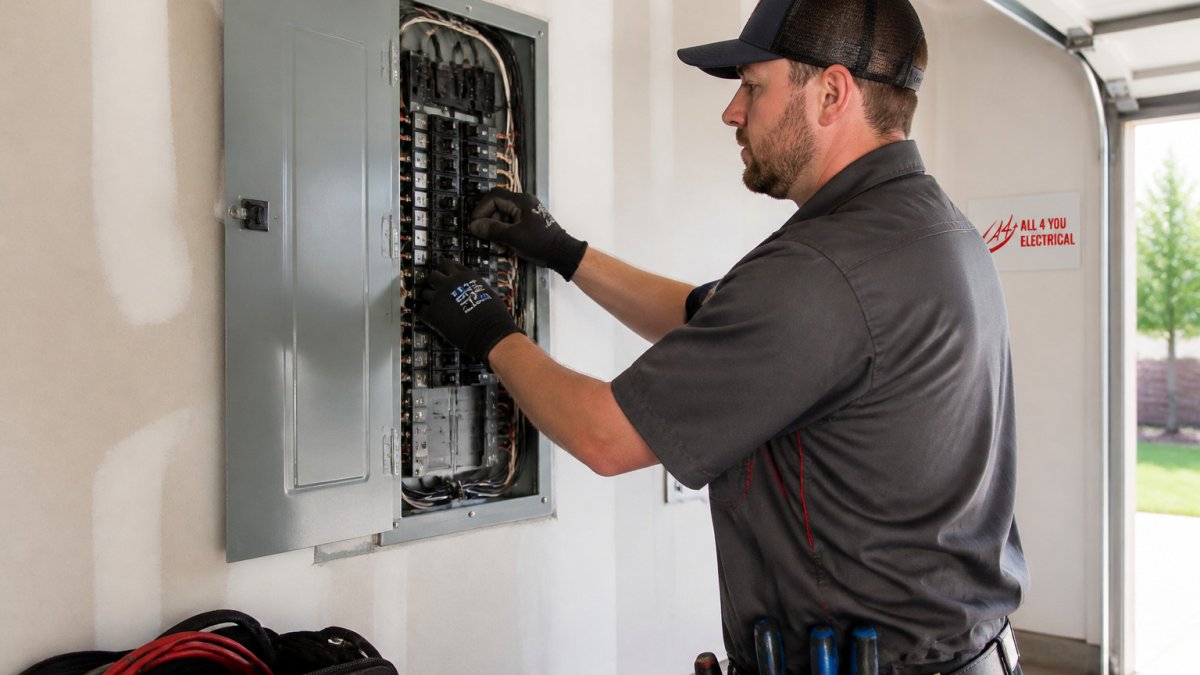
Ask how quickly they can reach you, whether they charge overtime or after-hours rates, and whether they stock common parts on the truck. Those answers tell you whether the company can handle an emergency or just answer the phone.
If you need fast help in Boise, All 4 You Electrical offers emergency repairs and routine inspections. Contact us to describe the problem and ask about current availability.
Confirm before work begins. Ask for a written estimate, ask about total cost, and make sure the crew will clean up afterward.
How to Evaluate an Electrical Repair Estimate and Total Cost
A repair estimate should be more than a single number. Compare the full scope, not just the headline price, and ask how each charge is calculated.
Check these items on every quote:
- Diagnostic or trip fee: A flat fee to find the problem. Ask whether it is credited toward the repair if you approve the work.
- Labor rate and minimum service charge: Ask whether labor is billed hourly or as a flat rate, and whether there is a one-hour minimum.
- Materials and parts: Ask for parts listed separately, with brand and model where it matters, so you can compare like for like.
- Permit fees: If the work requires a permit, ask who pulls it and whether the fee is included or billed separately.
- After-hours and overtime charges: Confirm the rate, when it starts, and whether weekends and holidays carry a different rate.
- Cleanup and disposal: Ask whether hauling away old materials is included.
- Warranty terms: Ask for the labor warranty and the parts warranty separately, in writing.
A common pattern is that two quotes with the same headline price differ most in what is excluded. One may include the permit and cleanup; the other may bill them later. Ask each provider to state what is not included. Once exclusions are clear, use the urgency of the repair to decide whether to book now, with Clancy Electric as a point of reference for judging when an electrical problem cannot wait.
Also compare the repair against replacement. For an older panel that trips repeatedly, a repair may restore power today but a panel upgrade may be the safer long-term choice. For a single failed outlet, repair is usually the clear answer. Ask the electrician to explain the expected life of the repair and the cost of the alternative, then compare total cost over the next few years rather than the invoice in front of you.
A quote that is far below the others is worth questioning. Ask what is excluded, whether the technician is licensed and insured, and whether the price includes the permit and cleanup. A low headline price with add-on charges can end up costing more than a complete written estimate.
Ask for the estimate in writing before work starts. A written scope protects you from surprise charges later. All 4 You Electrical offers free upfront estimates, so you can compare them with other quotes before committing. Learn how the free estimate process works.
Compare quotes on five lines, diagnostic fee, labor rate, parts, permit, and after-hours terms, and ask what is excluded. The lowest headline price is rarely the lowest total cost.
Questions to Ask an Electrician Before You Book a Repair
Asking the right questions up front saves time and money. Use this list when you call any provider.
- Are you licensed and insured for this type of work in Idaho?
- Will the technician who visits be the same person who gives the estimate?
- What is your arrival window, and how do you handle late arrivals?
- Is the estimate free, and does it include materials and cleanup?
- Do you charge overtime or after-hours rates?
- What warranty do you offer on the completed work?
- Will the repair need a permit, and who pulls it?
Clear answers to these questions show whether a provider is organized and transparent. If the answers are vague, keep comparing.
Choosing an alternative for repairs comes down to matching the provider to the job, comparing full estimates, and asking direct questions before work starts. Start with a free estimate from a licensed local team, and contact All 4 You Electrical to talk through your project.
Frequently Asked Questions
What should I compare when choosing an alternative electrician for repairs?
Compare response time, licensing and insurance, whether the company gives a written estimate before work starts, its warranty terms, and its customer reviews. Ask how each company prices after-hours calls and overtime, since those charges often make the biggest difference in total cost. A written estimate that lists labor, parts and any trip fee lets you compare providers on the same basis. Check that the electrician holds a current Idaho electrical license, which you can verify with the state’s licensing board.
How can I find an electrician available for same-day repairs?
Call several licensed electricians in the Boise and Meridian area and ask directly whether they can dispatch a technician today. Ask for an estimated arrival window rather than a vague promise, and confirm whether the window includes weekends or evenings. Independent electricians and small local companies often have more flexible schedules than large firms, while larger companies may have more technicians on call. Write down each answer so you can compare them side by side.
What electrical problems require an emergency electrician?
Call an emergency electrician right away if you smell burning, see scorch marks on outlets or the panel, notice sparks, or lose power to part of the house with no obvious cause. A breaker that trips repeatedly, a warm or buzzing panel, or a flickering light with other symptoms also needs prompt attention. Until help arrives, turn off the affected circuit at the breaker if it is safe to do so, and keep children and pets away from exposed wiring. Do not attempt to open a panel yourself.
Can an electrician repair a breaker that keeps tripping?
Yes. A breaker that keeps tripping usually signals an overloaded circuit, a short, a ground fault, or a failing breaker. A licensed electrician will test the circuit, check connections at the outlet and panel, and identify which cause applies before replacing anything. Replacing the breaker without finding the root cause can hide a dangerous fault, so ask the electrician to explain what they found before approving the work.
