Quick Summary
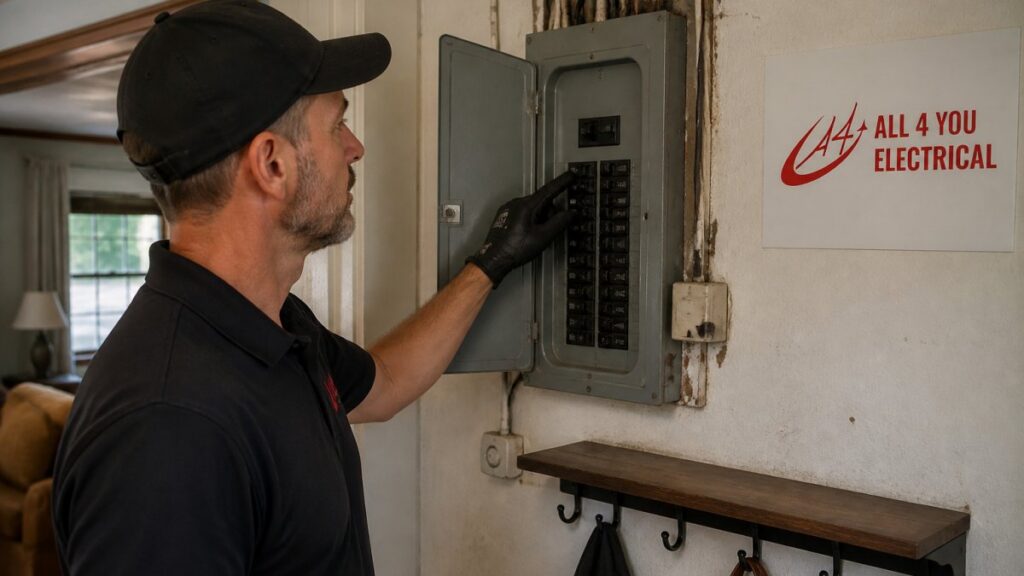
An older home electrical inspection in Boise starts with the service panel, then traces aging wiring like knob-and-tube and aluminum branch wiring at accessible points. A licensed electrician should deliver a written report that ranks findings by risk, so you know what to fix now.
- Count open breaker slots and note the main breaker rating to check panel capacity.
- Look for porcelain knobs or brittle cloth insulation on knob-and-tube wiring in the attic, basement and crawlspace.
- Silver-colored conductors at outlets and switches may indicate aluminum branch wiring, which can loosen and heat over time.
- Take outlets that feel warm or show scorching out of service until an electrician inspects them.
- Ask for a written report that sorts findings into address now, plan within a year, and monitor.
Table of Contents
- Why Older Homes Need a Different Electrical Approach
- Common Legacy Wiring Types and Their Risks
- Older Home Electrical Inspection Checklist
- Electrical Panel Capacity and When to Upgrade
- Rewiring an Old House: Scope, Phasing and Cost
- Boise Permits, Inspections and Code Considerations
- How to Vet an Electrician for Your Older Home
- Booking Your Older Home Electrical Assessment
- Frequently Asked Questions
Why Older Homes Need a Different Electrical Approach
Last Updated: November 2, 2026
Older homes in Boise often run on wiring and panels designed for far lighter loads than today’s kitchens, home offices and EV chargers. A house built decades ago often gets asked to power devices its original builders never imagined.
Electrical needs have changed faster than most older homes have. A typical household now runs appliances, electronics and climate equipment at the same time, and each addition pulls harder on a system that may have been sized for a few lights and an oven.
Older homes call for a different approach than new builds.
Common Legacy Wiring Types and Their Risks
Several wiring types show up often in older Boise homes, and each carries its own risks. Knob-and-tube wiring, common in homes built before the 1940s, uses separate copper conductors insulated with porcelain and cloth.
Aluminum branch wiring, used in many homes built in the 1960s and 1970s, presents a different concern. Aluminum expands and contracts more than copper, which can loosen connections at outlets and switches and create heat.
Older panels bring their own problems. Fuse boxes and some older breaker panels may lack the capacity or protection expected today.
Older Home Electrical Inspection Checklist
A thorough inspection of an older home is part detective work and part safety review. The goal is not just to list problems but to rank them by risk so you know what to fix now and what can wait. The following areas often surface serious findings in pre-1980s homes.
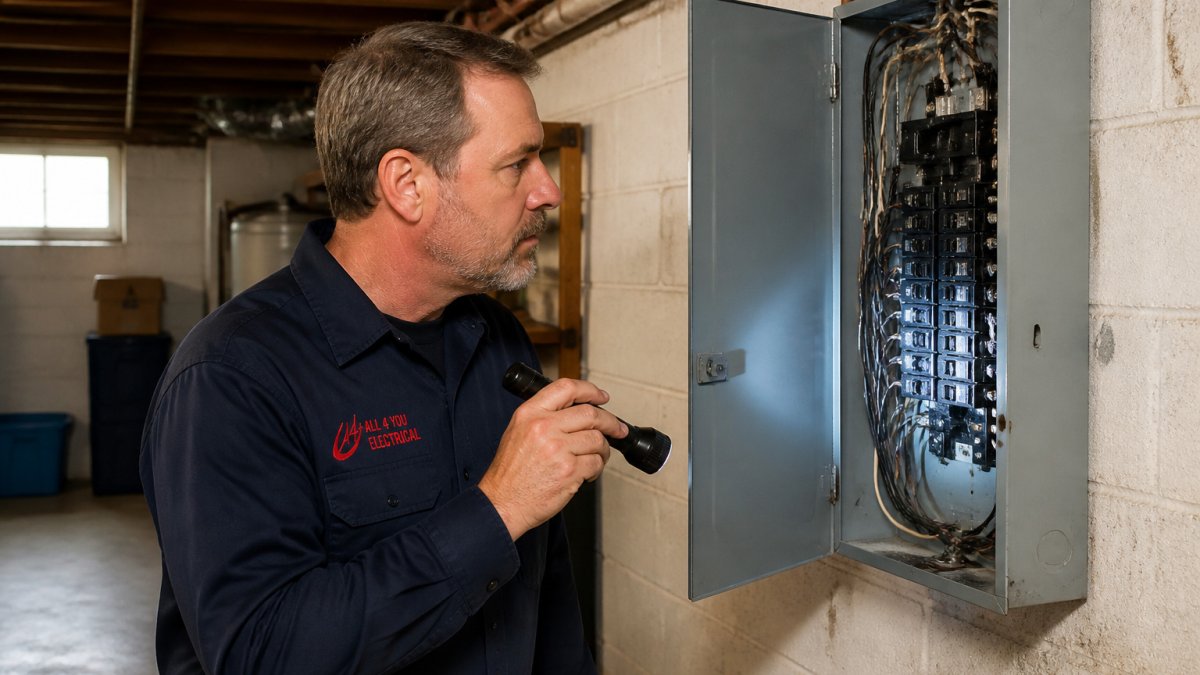
Start with the service panel
What matters:
- Available capacity. Count open breaker slots and note the main breaker rating (60-amp, 100-amp, 150-amp or 200-amp). A full panel with no open slots is a common bottleneck when adding circuits.
- Heat and corrosion. Discolored breakers, scorch marks, rust or a burning smell point to overloaded or failing connections and warrant immediate evaluation.
- Labeling. A panel with no legible circuit directory makes troubleshooting slower and is a sign of past informal work.
- Obsolete equipment. Fuse boxes and certain older breaker brands may lack modern trip protection; an electrician can tell you whether parts are still available and whether replacement is the safer path.
Trace the branch wiring at accessible points
An electrician cannot see inside every wall, but accessible points reveal a lot:
- Knob-and-tube. Look in the attic, basement and crawlspace for porcelain knobs and cloth-wrapped conductors. Brittle or cracked insulation is a fire concern, and splicing knob-and-tube into modern circuits is a red flag.
- Aluminum branch wiring. Often found in homes built roughly 1965-1973. Look for silver-colored conductors at outlets and switches; the concern is loose connections that heat up over time.
- Cloth-insulated wiring. Common in mid-century homes; insulation can crumble when disturbed, so any repair should be handled carefully.
Check outlets, switches and grounding
- Outlets that feel loose, are warm to the touch, or show scorching should be taken out of service until inspected.
- Missing grounding (two-prong outlets, or three-prong outlets with no ground path) affects both safety and how modern electronics perform.
- GFCI protection is expected in kitchens, bathrooms, garages, basements and outdoors; AFCI protection is expected on many bedroom and living-area circuits in newer code cycles. Absence in an older home is common but worth planning for.
Look for signs of past DIY or unpermitted work
Spliced wires outside a junction box, junction boxes without covers, and circuits that appear to have been added without a permit are all common in older homes. These are not automatically dangerous, but they need to be opened up and evaluated.
If you see scorch marks, smell burning, or have a breaker that will not reset, stop using that circuit and call a licensed electrician promptly. Those are not “wait until next month” findings.
Ask for a written, prioritized report
The most useful deliverable is a report that separates findings into three buckets: address now (safety), plan within a year (reliability and code), and monitor (aging but currently serviceable). That structure lets you budget instead of reacting. If an electrician will not put findings in writing, that is a reason to keep looking.
The table below ranks the main inspection areas by what they typically reveal.
| Area | What to check | Why it matters |
|---|---|---|
| Service panel | Open slots, main breaker rating, heat or corrosion | Capacity limits and overheating |
| Knob-and-tube | Porcelain knobs, brittle or cracked cloth insulation | Fire concern, unsafe with modern loads |
| Aluminum branch wiring | Silver conductors at outlets and switches | Loose connections that heat over time |
| Outlets and switches | Looseness, warmth, scorching | Take out of service until inspected |
| Grounding and protection | Two-prong outlets, GFCI and AFCI coverage | Safety and electronics performance |
| Past DIY work | Spliced wires, uncovered junction boxes, unpermitted circuits | Needs opening up and evaluation |
Electrical Panel Capacity and When to Upgrade
Your panel is the heart of the system, and capacity matters. Signs that a panel may be undersized include breakers that trip often, lights that dim when large appliances start, and a panel that is full with no room for new circuits. A panel that is old, rusted or shows scorch marks should be evaluated right away.
Upgrading from 100-amp to 200-amp service is a common project for older homes that add a second refrigerator, central air, an EV charger or a workshop. Our guide on 7 Signs Your Electrical Panel Needs an Upgrade explains the warning signs in more detail, and you can see our electrical panel upgrade service for what the work involves.
Common signs your home may need a panel upgrade are also covered in our Common Signs You Need an Electrical Panel Upgrade overview.
Rewiring an Old House: Scope, Phasing and Cost
Rewiring an older home is a larger project than most repairs, and it rarely needs to happen all at once. Many homeowners phase the work by area, starting with the highest-risk circuits, such as kitchens, bathrooms and any spots with visible damage. Others coordinate rewiring with a remodel to reduce wall repairs.
Cost depends on the size of the home, the wiring type, the number of circuits and how much access the electrician has. For a realistic sense of what affects the budget, our Cost of Electrical Panel Upgrade 2026: Complete Pricing Guide breaks down the factors involved.
Boise Permits, Inspections and Code Considerations
Electrical work in an older home almost always involves a permit, and the permit process is one of the best protections you have as a homeowner. It creates a record that the work was reviewed and inspected, which matters at resale and if you ever file an insurance claim. Unpermitted work can complicate both.
What typically triggers a permit
Most jurisdictions require a permit for new circuits, panel changes or upgrades, service changes, and significant rewiring. Simple replacements, swapping a like-for-like light fixture or receptacle, often do not. The line between the two is not always obvious, so the practical rule is to ask the electrician to confirm permit requirements in writing before work starts. A contractor who routinely pulls permits will answer quickly; one who discourages permits is a warning sign.
How the inspection process usually works
A permitted job typically involves one or more inspections: a rough-in inspection before walls are closed (for remodels and rewiring), and a final inspection after devices and fixtures are installed. The electrician schedules these with the local building department, and the inspector either approves the work or issues a correction notice. Corrections are normal and not a sign of a bad contractor, what matters is that they are resolved and re-inspected.
Code considerations specific to older homes
Current electrical code is based on the National Electrical Code, which Idaho has adopted. Older homes are not required to be brought fully up to current code just because they are old, but code does apply to work you do now. In practice that means:
- Modified circuits may need to meet current requirements for grounding, GFCI/AFCI protection and box fill.
- Panel replacements typically require the new panel to meet current standards, including working clearance and labeling.
- Added load, an EV charger, a hot tub, a second kitchen appliance, may require a load calculation and, in some cases, a service upgrade to stay compliant.
Ask your electrician which inspections will be required and who schedules them. On a phased rewiring project, knowing the inspection sequence up front helps you plan around wall openings and remodels.
Why this matters more in an older home
In a newer home, code compliance is mostly a checklist on a fresh installation. In an older home, the question is how new work integrates with legacy wiring, an aging panel and possibly past unpermitted additions. That is where a locally experienced electrician earns their keep: knowing what the local building department will look for, how to document existing conditions, and how to sequence work so inspections pass the first time. Confirm with your local building department which requirements apply to your specific project, and make sure the permit and inspection plan is part of your written estimate.
How to Vet an Electrician for Your Older Home
Not every electrician has experience with older homes, so ask specific questions before you hire. Confirm the company holds a current license and insurance, and ask whether it has worked on homes of your age. Look for clear answers about wiring types and panel work.
Get a written estimate with the scope of work spelled out. Ask about cleanup, since dust and debris are a common complaint after electrical work. You can also read our Free Estimates for Electrical Services: 2026 Guide to understand what to expect from the estimate process.
Booking Your Older Home Electrical Assessment
If your home was built before the 1980s, or you have noticed warning signs, a professional assessment is a sensible next step. Start with an inspection to identify what needs attention, then decide which repairs, upgrades or rewiring to prioritize.
Contact All 4 You Electrical to schedule your assessment and get a clear, upfront estimate.
Frequently Asked Questions
What electrical problems are common in older homes?
Older homes often have ungrounded outlets, two-prong receptacles, overloaded or outdated fuse-box and small breaker panels, brittle insulation on old cloth-wrapped wiring, and added circuits that were spliced in without proper junctions. Many homes built before the 1970s still rely on wiring that cannot safely support modern loads such as window air conditioners, electric ranges, and home office equipment. A walkthrough by a licensed electrician can identify these issues before they cause overheating or fire.
How do I know if an older home needs rewiring?
Warning signs include frequently tripping breakers, lights that dim when large appliances start, warm outlet covers, burning smells, buzzing panels, and outlets that do not hold a plug firmly. Wiring types such as knob-and-tube, aluminum branch wiring, or cloth-insulated cable usually signal the need for a professional evaluation. A rewiring decision should follow a full inspection rather than a guess, because partial repairs sometimes solve one problem while leaving others in place.
Is knob-and-tube wiring safe in an older house?
Knob-and-tube wiring was standard in homes built into the 1930s, and it can still function, but its insulation becomes brittle with age and it was never designed for heavy modern loads or insulation packed around it. Blown-in insulation can trap heat around these conductors, and many insurers ask for replacement or documentation before issuing coverage. A licensed electrician can test the circuits and recommend whether sections should be replaced now or monitored.
What should I ask an electrician before hiring them for an older home?
Ask whether they hold a current Idaho electrical contractor license, whether they carry liability insurance and workers’ compensation, and whether they have experience with legacy wiring. Request a written estimate that lists scope, materials, and permit responsibility. Ask how they will handle permits and inspections with the City of Boise or Ada County, and whether they will leave the work area clean. Free upfront estimates from All 4 You Electrical help you compare options without surprise charges.
