Table of Contents
- What Is Considered an Electrical Emergency
- Electrical Safety Steps Before an Electrician Arrives
- How to Book Emergency Electrical Repair Service
- What to Tell an Emergency Electrician
- Emergency Electrician Response Time and Availability
- What Happens During an Emergency Visit
- Common Electrical Issues That Require Emergency Service
- Preparing Your Home for the Electrician
- Frequently Asked Questions
Last Updated: October 11, 2026
What Is Considered an Electrical Emergency
An electrical emergency is an urgent situation that poses immediate risk to safety, property, or power supply. These situations demand rapid professional intervention before they escalate into fires, electrocution hazards, or widespread outages.
A true emergency threatens life or property immediately, complete power loss, visible sparks, burning smells, or exposed wiring demand same-day response. Urgent repairs like repeated breaker trips or a single dead room need attention within 24-48 hours but aren’t immediately dangerous.
True Emergencies vs. Urgent Repairs
True emergencies include complete power loss, visible sparks, burning smells, exposed wiring, electrical shocks from fixtures, or smoke from the electrical panel. These demand same-day or immediate response because they create fire risk or electrocution danger.
Urgent repairs are serious but not immediately life-threatening. A circuit breaker trips repeatedly. One room has no power while others work fine. An outlet feels warm to the touch but isn’t actively sparking. These need professional attention within 24-48 hours to prevent escalation into true emergencies.
The key difference: Can someone get seriously hurt or will a fire start in the next few hours? If yes, it’s an emergency. If the issue is annoying but stable, it’s urgent repair work. Understanding this distinction helps you communicate accurately when you call for service and ensures you get the right response time.
Electrical Safety Steps Before an Electrician Arrives
Your immediate actions during an electrical emergency can prevent injury or property damage. These steps are straightforward but critical.
Immediate Actions to Take
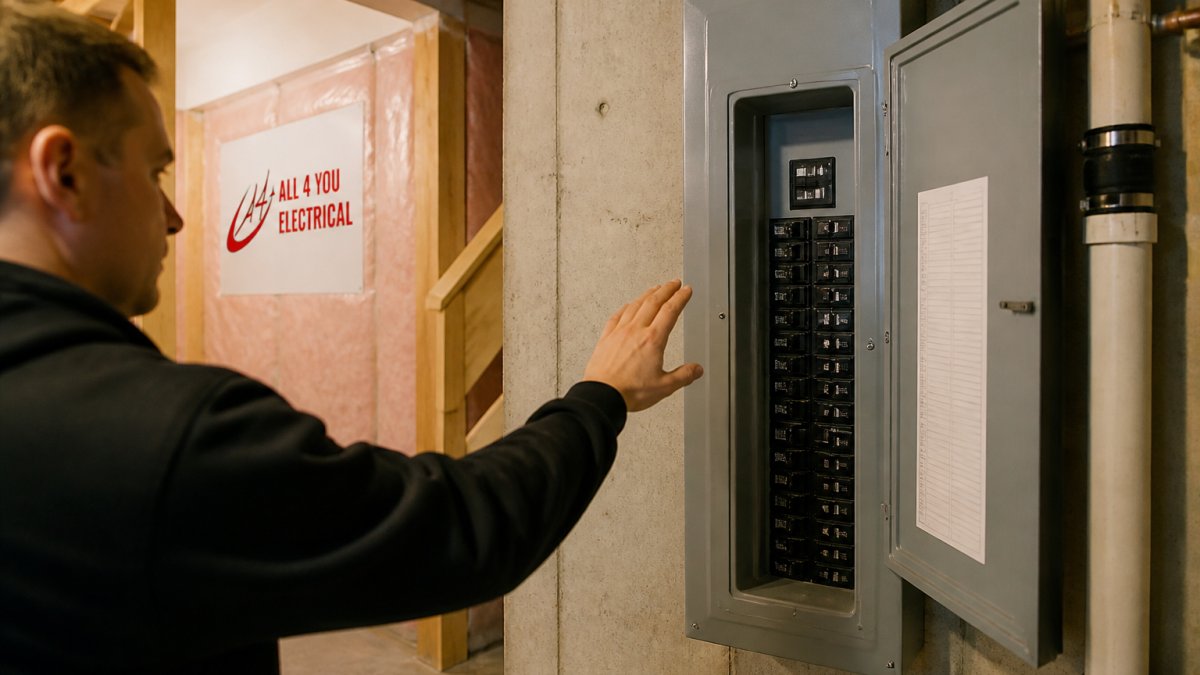
First, turn off power at the main breaker if you can safely reach it. If the problem is isolated to one room or circuit, flip that breaker off instead.
Second, move people and pets away from the affected area. If there’s active sparking, smoke, or burning smell, evacuate the immediate vicinity and move to a safe distance.
Third, if you smell burning or see smoke, open windows and doors for ventilation. Do not use HVAC systems, which could spread smoke or fumes.
Fourth, do not use water near electrical hazards. Water conducts electricity, so never spray water on electrical fires or wet areas near exposed wiring or sparking outlets.
What Not to Do
Do not attempt DIY repairs, electrical systems carry lethal voltage. Do not ignore the problem; electrical issues worsen. Do not bypass a dead circuit by plugging appliances elsewhere; this overloads remaining circuits. Do not touch wet areas near fixtures or panels.
How to Book Emergency Electrical Repair Service
Getting professional help quickly requires knowing what to say, what to expect cost-wise, and how dispatch prioritizes calls.
Step-by-Step Booking Process
Step 1: Call immediately for true emergencies. Phone contact is fastest for sparks, burning smells, complete power loss, or exposed wiring. Have your address and a brief description ready.
Step 2: Describe the problem clearly. Say “sparks from the kitchen outlet” instead of “electrical problem.” Mention shocks, smoke, burning smells, or whether critical areas like bedrooms are affected.
Step 3: Provide your location and access details. Note gate locks, side entrances, or how the technician will gain entry if you’re not home.
Step 4: Ask about arrival time and fees upfront. Confirm the service call fee, after-hours surcharge, and whether the diagnostic fee is credited toward repairs.
Step 5: Prepare your home while waiting. Clear pathways to the panel and affected areas. Have your home’s age, panel type, and recent electrical work information ready.
Understanding Emergency Pricing and Cost Factors
Emergency electrical service costs more due to after-hours response and 24/7 availability. Expect these cost components:
Service call fee: $75-$150+ to diagnose; may be credited toward repairs if you approve work. After-hours surcharge: 50-100% markup on labor rates for calls outside 5 p.m.-8 a.m. weekdays or anytime weekends. Diagnostic time: 15-30 minutes for simple issues, 1-2 hours for complex ones. Repair costs: Parts and labor quoted separately; confirm whether the quote is firm. Minimum charge: $150-$250 even for quick repairs.
How to Confirm Pricing Before Dispatch
Ask the dispatcher: “What is the service call fee and will it be credited toward repairs?” “What is the after-hours surcharge?” “What is the minimum charge?” “Will I receive a quote before work begins?” Reputable services answer clearly; refusal to discuss pricing upfront is a red flag.
What Happens If the Utility Is Responsible
If your entire neighborhood is dark, call your utility company’s outage line, they respond at no charge. If only your home is dark, an electrician can diagnose whether the problem is your main panel or the utility’s service line. If it’s the service line, the utility repairs it at no cost.
What to Tell an Emergency Electrician
Clear communication accelerates diagnosis and repair.
Describe exactly what happened: “Power went out in half the house” or “An outlet sparked when I plugged in the microwave.” Mention recent changes like new wiring or storms. Point out burn marks, melted insulation, or scorch marks. Describe the timeline and any previous similar issues. These details speed diagnosis.
Emergency Electrician Response Time and Availability
Most professionals maintain 24/7 availability for genuine emergencies. Response times vary by demand and location.
All 4 You Electrical provides emergency electrical repair service throughout the Boise and Meridian areas with rapid response times. We understand that electrical emergencies happen at inconvenient times, which is why our team maintains availability for true emergency situations.
What Happens During an Emergency Visit
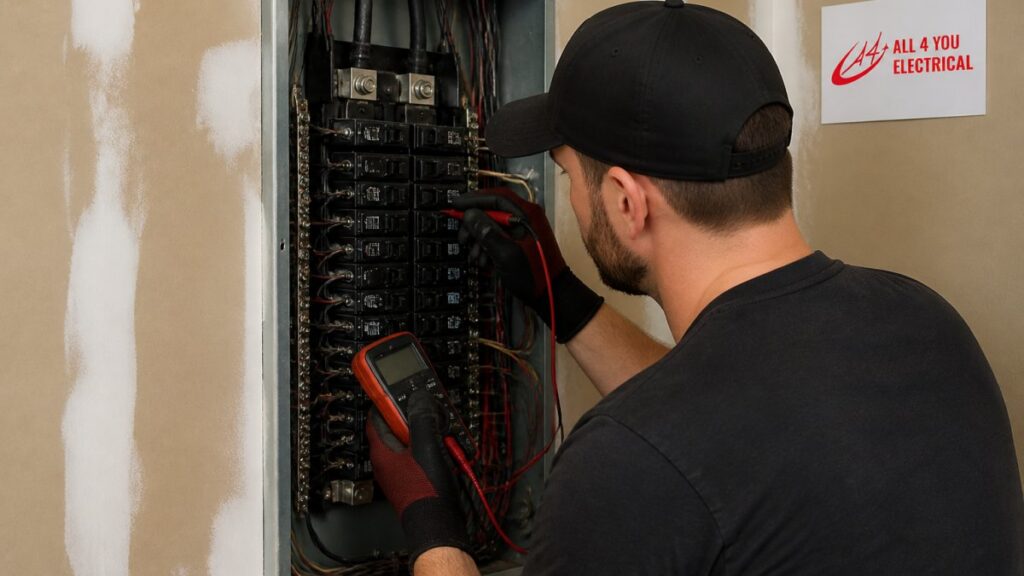
The electrician will assess the situation, check the main panel and circuits, and identify the root cause (15-30 minutes). They’ll explain findings and whether the fix is simple or complex. Simple repairs are completed on-site; complex issues may require parts or follow-up. They’ll test the work thoroughly and provide documentation and recommendations for future work.
Common Electrical Issues That Require Emergency Service
Not every electrical problem demands an emergency call. Understanding which issues need immediate response, which can wait 24-48 hours, and which belong to the utility company helps you book the right service and avoid unnecessary emergency fees.
True Emergencies: Call Immediately
Complete power loss to your entire home. Call your electrician immediately to diagnose whether the problem is your main panel or the utility’s service line.
Sparking outlets or fixtures. Visible sparks signal dangerous current that can ignite nearby materials. Stop using the outlet immediately and do not attempt to unplug anything.
Burning smells from outlets, the panel, or walls. This indicates insulation breakdown or excessive current. Evacuate the area and call emergency services immediately.
Exposed or damaged wiring. Do not touch cut, melted, or visibly damaged wiring. Call for emergency service immediately.
Electrical shocks from fixtures, outlets, or appliances. If you receive a shock, current is leaking where it shouldn’t.
Tripping breakers that won’t reset. If a breaker trips and immediately flips back on when reset, a serious short circuit or overload is present.
Urgent Repairs: Schedule Within 24-48 Hours
A single circuit breaker that trips occasionally. If one breaker trips every few days or weeks but resets normally, the circuit is overloaded or has a minor fault.
One room or area with no power while others work normally. If the kitchen has no outlets but the living room is fine, a single circuit has failed.
An outlet or fixture that feels warm but isn’t sparking. Warmth indicates excessive current or resistance, but if there’s no spark or burning smell, the hazard is developing but not immediate.
Flickering lights in one area. Flickering usually indicates a loose connection or failing fixture. It’s annoying but not immediately dangerous. Schedule service within 24-48 hours.
Outlets or switches that are discolored, cracked, or visibly worn. Cosmetic damage may indicate internal wear. Schedule service within a few days to inspect and replace if needed.
Utility Issues: Contact Your Utility Company
Widespread neighborhood outage. If multiple homes or a whole block is dark, the problem is almost certainly a utility transformer, downed line, or substation issue. Call your utility company’s outage line (usually on your bill or their website). They respond to outages at no charge. Do not call an electrician for a utility outage.
Power loss only at the meter or service entrance. If the problem appears to be at or before your main panel, it may be the utility’s responsibility. Call the utility first to confirm. Many utilities own the meter and service line up to your home’s main disconnect.
Downed power lines near your home. If a tree has brought down a power line, do not approach it. Call 911 and your utility company immediately. This is a utility emergency, not an electrician issue.
How to Decide: A Quick Decision Tree
Is there active sparking, burning smell, or smoke? → Call emergency service immediately (or 911 if smoke is heavy).
Is there a shock hazard or exposed wiring? → Call emergency service immediately.
Is your entire home dark and the neighborhood is lit? → Call your electrician for emergency diagnosis.
Is your entire neighborhood dark? → Call your utility company’s outage line.
Is one circuit or room affected, no sparks, no burning smell? → Schedule service within 24-48 hours.
Is the problem cosmetic (discolored outlet, flickering light)? → Schedule routine service within a few days.
When in doubt, call your electrician and describe what you’re experiencing. They can triage the urgency and advise whether you need emergency service or can wait for a scheduled appointment.
Preparing Your Home for the Electrician
Simple preparation accelerates the work and ensures safety.
Clear pathways to your electrical panel. Remove boxes, furniture, or storage that blocks access. The electrician needs clear space to work safely.
Ensure adequate lighting in work areas. If the power is out in the problem area, have flashlights or work lights available.
Turn off major appliances in the affected area if it’s safe to do so. This reduces electrical load and sometimes prevents further damage.
Have your home’s age and construction type ready.
Secure pets in another room. Curious animals can interfere with the work or create safety risks.
Clear the work area of valuables or breakables. Electrical work sometimes requires moving furniture or equipment, and you want to protect your belongings.
Provide information about any recent electrical work. “New addition wired last year” or “Recently upgraded the kitchen circuits” gives context for the current problem.
Frequently Asked Questions
How quickly can an emergency electrician respond?
Response times vary based on current workload and your location. All 4 You Electrical offers 24/7 emergency service with rapid response to urgent electrical issues. When you call, we assess the severity of your situation and dispatch a licensed electrician as quickly as possible. For true emergencies like active electrical fires or severe shock hazards, response is prioritized. Contact us immediately to learn your specific response time in your service area.
What is considered an electrical emergency?
An electrical emergency requires immediate professional attention to prevent fire, injury, or property damage. True emergencies include sparking outlets, burning smells from electrical panels or wiring, exposed live wires, complete loss of power, flickering lights paired with burning odors, or frequent circuit breaker trips. Non-emergencies like a single blown outlet or dimmed lights can usually wait for business hours. When in doubt, call an emergency electrician to assess the situation safely.
What should I tell an emergency electrician when I call?
Provide clear, specific information: describe the problem (sparks, burning smell, no power), note when it started, mention any recent weather or events, and identify affected areas (one room or entire house). Tell the electrician if anyone has been shocked or if you smell burning. Describe any visible damage or unusual sounds. This information helps the electrician prepare equipment and prioritize safety. Stay calm and answer questions directly, your details guide the response.
What electrical safety steps should I take before an electrician arrives?
Turn off power at the circuit breaker if safe to do so, or shut off the main breaker if you cannot isolate the problem. Do not touch sparking outlets, exposed wires, or wet electrical equipment. Keep children and pets away from the affected area. Open windows if you smell burning to ventilate fumes. Do not attempt repairs yourself. If there is active fire or you feel unsafe, evacuate and call emergency services. Stay in a safe location and wait for the licensed electrician to arrive.
When electrical emergencies strike, quick action and professional help prevent injury and property damage. All 4 You Electrical specializes in emergency electrical repair throughout the Boise and Meridian areas, offering rapid response with free upfront estimates and a commitment to leaving your property clean after service. Contact us immediately for true electrical emergencies, our experienced team handles residential and commercial electrical emergencies with the urgency they deserve.