Last Updated: October 23, 2026
Quick Summary
Home generator installation boise in Idaho involves sizing a backup power system to your essential loads, installing a transfer switch to safely connect the generator to your electrical panel, running fuel lines, obtaining permits, and passing inspections before commissioning. A properly sized system keeps your lights, HVAC, refrigerator, and critical systems running during outages, but requires professional installation by a licensed electrician to meet code and prevent safety hazards like backfeeding or carbon monoxide exposure.
- Calculate your essential loads in watts, typically HVAC, water heater, refrigerator, and lighting, then add a safety margin to determine the correct kilowatt range for your generator.
- Installation involves five components: the generator unit, an automatic or manual transfer switch, electrical labor and materials, fuel supply lines, and site work with permits and inspections.
- Distance from your electrical panel and gas meter, fuel type, transfer switch scope, site conditions, and panel age are the variables that most affect installation cost.
- Permits include electrical, gas, and sometimes building permits; inspections verify transfer switch operation, grounding, clearances, exhaust direction, and fuel line sizing before final approval.
- Monthly exercise runs of 10-20 minutes under load, annual service with oil and filter changes, and seasonal checks keep your generator reliable for 10-15 years with proper maintenance.
Table of Contents
- Why Home Generator Installation Matters for Boise Homeowners
- Whole House Generator Sizing: Calculating Your Backup Power Needs
- Home Generator Installation Cost: What to Expect
- Generator Transfer Switch Installation: Connecting Your System Safely
- Permits, Inspections, and Electrical Code Requirements
- Step-by-Step Home Generator Installation Process
- Standby Generator Maintenance Schedule and Ownership
- Getting Your Free Installation Estimate
- Frequently Asked Questions
Why Home Generator Installation Matters for Boise Homeowners
Power outages happen without warning: a storm knocks out the grid and your home goes dark, your refrigerator stops, and your HVAC goes silent. For some homeowners this is a genuine safety issue, which is where home generator installation boise in Idaho comes in, practical preparedness, not a luxury upgrade.
Backup power can turn a crisis into a minor disruption. A whole-home generator keeps your lights on, food cold, and family comfortable when the grid fails, but the right system requires understanding your power needs, local codes, and the installation process.
The difference between a generator that works and one that creates problems comes down to sizing and professional installation. Too small and it won’t power what matters; too large and you’ve overspent.
The most common mistake homeowners make is buying a generator without calculating their actual load requirements. A licensed electrician can help you size the system correctly before you make a purchase.
Whole House Generator Sizing: Calculating Your Backup Power Needs
Sizing a whole-home generator starts with what you actually need to run during an outage, not everything simultaneously, but what matters most, matched to a system you can afford.
List your essential loads, HVAC, water heater, refrigerator, well pump (if you have one), and critical lighting, and add up their running wattage, not the higher starting wattage; most appliances list this on a label or in the manual.
A practical framework: calculate your largest single load (often the AC or electric water heater), then add the other essentials.
A properly sized generator runs your essential systems without overloading. Undersizing creates problems; oversizing wastes money. The sweet spot is usually a specific kilowatt range for most residential installations.
Professional load calculations account for your specific equipment, climate, and usage patterns. All 4 You Electrical performs this analysis as part of your free estimate.
Home Generator Installation Cost: What to Expect
Most competitors stop at “request a quote,” leaving homeowners no way to sanity-check an estimate. The breakdown below explains what each line item covers and what drives it up or down, so you can compare bids on equal terms.
A standby generator installation is five purchases bundled together:
- The generator unit itself. Air-cooled units are a common residential choice; liquid-cooled units serve larger homes or all-electric households. Price scales with capacity and enclosure rating.
- The transfer switch. A service-rated automatic transfer switch (ATS) is typically required for a whole-home installation. Manual transfer switches cost less but require you to throw the switch yourself during an outage.
- Electrical labor and materials. Conduit, conductors, grounding, panel work, and the electrician’s time to wire the ATS and generator.
- Fuel supply. A natural gas connection from the meter, or a propane tank and line run. Long runs, trenching, and gas-line sizing upgrades add cost.
- Site work and permits. A concrete or composite pad, grading, clearance adjustments, the electrical permit, the gas permit where applicable, and inspection fees.
What moves the price most
- Distance from the panel and gas meter. A generator 10 feet from the panel is a very different job than one 60 feet away requiring trenching across a finished yard.
- Fuel type. Natural gas avoids tank cost but may require a meter or service-line upgrade if the existing supply can’t handle the generator’s demand. Propane requires a tank, often leased or purchased separately and sometimes carrying a minimum-usage agreement.
- Transfer switch scope. Whole-home ATS versus a essential-circuits subpanel changes both equipment and labor.
How to read an estimate
Ask every bidder to itemize the same five buckets, then confirm in writing:
- Is the ATS included, and is it service-rated for the whole panel?
- Is the concrete pad, gravel base, or composite pad included?
- Is the gas line and any meter upgrade included, or is that a separate utility charge?
A bid that is dramatically lower than the others usually means something is excluded, often the transfer switch, the pad, the gas line, or the permit. Confirm scope in writing before signing, and never let price alone decide between a permitted installation and an unpermitted one.
Financing is common in this category. Ask whether the installer offers a payment plan or works with a lending partner, and compare the total financed cost against paying cash, not just the monthly payment.
Get at least three itemized estimates and compare them line by line. The lowest total is not always the lowest cost, a bid that omits the transfer switch or permit is not comparable to one that includes them.
Budget for the generator, the transfer switch, electrical labor, fuel supply, and site/permitting as separate line items. The variables that most often blow up a budget are trenching distance, gas supply upgrades, and an aging electrical panel.
Generator Transfer Switch Installation: Connecting Your System Safely
The transfer switch is the critical safety component connecting your generator to your home’s electrical system.
A manual transfer switch requires you to physically switch power over during an outage.
A licensed electrician must install the switch to code.
Proper installation means the switch is accessible, clearly labeled, serviceable, and all wiring protected from weather and damage. This is not a DIY project, code violations create fire hazards and failed inspections.
Permits, Inspections, and Electrical Code Requirements
This is the section most local service pages skip, and the one that most often delays a project. Here is what actually gets permitted, inspected, and checked.
What requires a permit
A standby generator installation typically triggers more than one permit:
- Electrical permit, covers the generator circuit, the transfer switch, grounding, and any panel modifications.
- Gas permit, where a fuel line is added or altered, the gas piping work is usually permitted and inspected separately from the electrical work.
- Building/mechanical permit, may be required for the pad or for structural mounting in some jurisdictions.
Your electrician should pull the electrical permit in the licensed contractor’s name, not yours. Ask for the permit number before work begins.
The inspection sequence
A typical sequence looks like this:
- Rough-in inspection, conduit, wiring, and gas piping are inspected before being covered or backfilled.
- Final electrical inspection, the transfer switch, grounding, bonding, and generator connections are verified.
- Final gas inspection, line sizing, leak testing, and shutoff placement are verified.
- Utility coordination, where a gas meter or service upgrade is needed, the utility schedules its own work, which can add days to the timeline.
What inspectors actually check
The National Electrical Code (NEC) is the model code adopted in Idaho, with local amendments. Inspectors commonly verify:
- Transfer switch operation, that the switch mechanically or electrically prevents the generator and utility from being connected at the same time, preventing backfeed.
- Grounding and bonding, the generator, transfer switch, and service equipment are bonded per code.
- Clearances, manufacturer-required clearances from the structure, windows, doors, and combustible surfaces are maintained.
Local considerations that affect approval
- Setbacks and lot lines. Propane tanks and generator enclosures have minimum distances from property lines and structures. A tight side yard can force a different location or a smaller unit.
- HOA and CCRs. Even where the city approves a location, a homeowners association may restrict placement, screening, or noise. Get HOA approval in writing before the pad is poured.
- Noise. Local noise expectations and manufacturer dB ratings at distance matter in denser neighborhoods; a quieter enclosure can be the difference between approval and a complaint.
Ask your installer for the permit number and the inspection schedule in writing before work starts. A contractor who resists permitting is telling you something about how the rest of the job will go.
Unpermitted generator work can complicate a future home sale, may void the manufacturer’s warranty, and can leave you responsible for bringing the installation up to code at your own expense.
The approval path is electrical permit, gas permit where applicable, rough-in inspection, final inspections, and utility coordination for any meter upgrade. Clearances, exhaust direction, grounding, and transfer-switch operation are the items most likely to fail a first inspection.
Step-by-Step Home Generator Installation Process
Professional home generator installation follows a structured process. Knowing the steps helps you plan accordingly.
Step 1: Site Assessment and Preparation
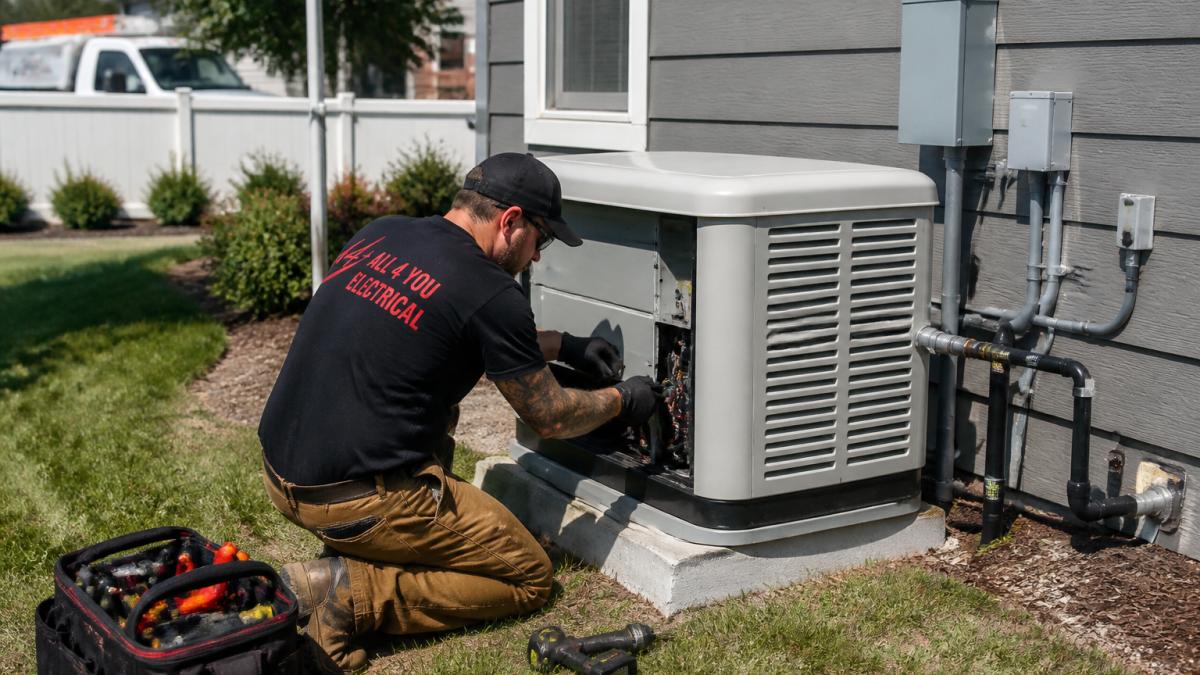
The installer determines the best location, checking clearances from windows, doors, and property lines, assessing ground conditions, and planning fuel line routing.
Step 4: Permits and Inspection
Once installation is complete, the city inspector verifies code compliance, grounding, clearances, fuel line installation, transfer switch operation, and electrical connections, typically within a few days.
Standby Generator Maintenance Schedule and Ownership
A generator requires regular maintenance to stay reliable: monthly testing, annual service, and seasonal checks keep it ready when you need it.
Monthly, run your generator under load for 10-20 minutes. This exercise keeps internal components lubricated and batteries charged.
Budget for eventual replacement: a well-maintained generator typically lasts 10-15 years depending on usage and maintenance, so planning ahead avoids unexpected costs at end-of-life.
Getting Your Free Installation Estimate
The best way to understand what home generator installation boise in Idaho actually involves is a professional assessment.
During your estimate, we assess your electrical system, calculate backup power needs, evaluate placement, and explain your options, answering questions about cost, timeline, and maintenance. Our estimate includes everything: equipment, labor, permits, inspection, and transfer switch installation.
| Step | What Happens | Timeline |
|---|---|---|
| Initial Contact | Schedule your free estimate | 1-2 days |
| Site Assessment | Evaluate property and electrical system | 30-60 minutes |
| Load Calculation | Determine your backup power needs | Done during visit |
| Estimate Provided | Detailed quote with all costs itemized | Same day or next day |
| Scheduling | Confirm installation date | Flexible to your calendar |
| Installation | Complete system setup and testing | 1-3 days depending on scope |
| Inspection | City inspector verifies code compliance | 1-2 weeks after completion |
| Commissioning | Final testing and your training | Done at completion |
Power outages disrupt your home and create genuine safety risks.
Frequently Asked Questions
How much does home generator installation cost?
Home generator installation cost depends on system size, fuel type, site preparation, electrical panel upgrades, and local labor rates. Standby generators for whole-home backup vary in pricing when including equipment and professional installation. Contact All 4 You Electrical for a free estimate tailored to your specific home and power needs, no surprise charges, just transparent pricing upfront.
What size whole house generator do I need for my home?
Generator sizing depends on your home’s total electrical load. Most residential homes need a specific kilowatt range for essential circuits or for whole-home backup. Calculate your load by listing all appliances you want powered simultaneously, HVAC, water heater, refrigerator, lights, and critical systems. A licensed electrician can perform a detailed load calculation and recommend the right size generator for your household.
Do I need a permit to install a standby generator?
Yes. Standby generator installation requires permits and inspections in most jurisdictions to ensure compliance with the National Electrical Code (NEC) and local electrical codes. Permits verify proper installation, safe fuel storage, adequate clearances, and correct transfer switch wiring. Licensed electricians handle all permitting and inspection coordination, ensuring your system meets all safety and legal requirements before operation.
How often should a standby generator be tested or maintained?
Standby generators should be tested monthly by running them under load for 10-20 minutes to ensure proper operation. Annual professional maintenance includes oil and filter changes, fuel system inspection, battery testing, and load testing. Regular maintenance prevents starting failures during emergencies and extends system lifespan. All 4 You Electrical provides maintenance scheduling to keep your backup power system ready year-round.
