Table of Contents
- How to Identify a Tripped Circuit Breaker
- Safety Checklist Before You Start
- What to Unplug Before Resetting a Breaker
- Step-by-Step: How to Reset a Tripped Breaker Safely
- What to Do When a Breaker Keeps Tripping
- When to Call an Electrician for a Tripped Breaker
- Common Mistakes to Avoid
- Conclusion
- Frequently Asked Questions
Last Updated: October 7, 2026
How to Identify a Tripped Circuit Breaker
When you need to reset tripped breaker switches, understand that a tripped breaker is a switch in your electrical panel that has automatically shut off to stop power flow when it detects a problem. This safety feature protects your home from electrical fires and damage (CPSC, ESFI Warn Consumers About Electrical Hazards In The Home “”Inspect and Protect!””…).
You’ll know a breaker has tripped when you lose power to part of your home. Lights go out. Outlets stop working. The issue is localized, not your whole house, usually just one room or area.
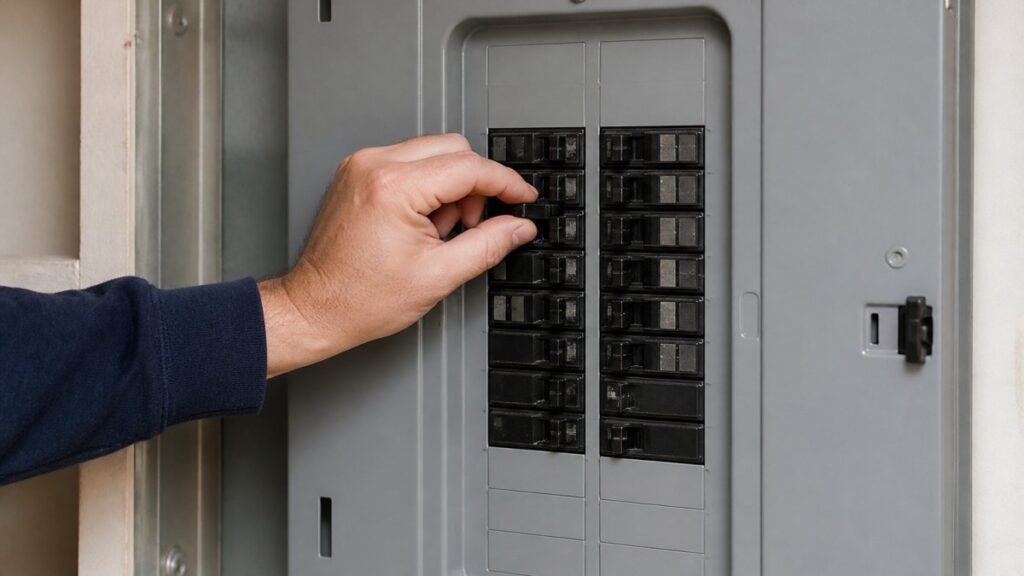
Finding the tripped breaker requires a quick look at your breaker panel. Head to your electrical panel, which is typically in a basement, garage, or utility closet. Open the cover and scan the switches. Most breakers are in the “on” position.
Look for visual clues. Some breaker panels have a red indicator window that shows when a breaker has tripped. Others simply show the switch in an obviously different position than its neighbors.
If your breaker panel is hard to locate, check near your water heater, furnace, or outside your home on an exterior wall. Many older homes have panels in the basement; newer homes often mount them in the garage or utility room.
Once you spot the tripped breaker, note which one it is. The breaker should be labeled inside the panel cover, it tells you which room or circuit it controls. This information helps you understand what caused the trip and what you need to fix.
Safety Checklist Before You Start
Before you touch anything in your breaker panel, follow these safety steps. Electrical panels carry serious risk. Respect the power.
Stop work if any of these conditions exist:
- Water is pooled around the breaker panel
- The panel itself is wet or damp
- You see scorch marks, burn damage, or melted plastic
- You smell burning or see smoke
- You feel tingling or numbness near the panel
- You are not comfortable working with electricity
In any of these cases, call a licensed electrician immediately. Do not attempt a reset yourself.
Before resetting the breaker, take these precautions:
Turn off lights in the affected room. This reduces the electrical load when power returns.
Wear dry clothes and dry shoes. Stand on a dry surface. Never touch the breaker panel with wet hands or wet feet.
Check the area around the panel for water, moisture, or debris. If the floor is wet, dry it first.
Make sure you have good lighting. Use a flashlight or your phone’s light to see the panel clearly.
Never reset a breaker if you don’t know what caused it to trip. A breaker that keeps tripping signals a real electrical problem, overload, short circuit, or ground fault. Resetting it temporarily masks the issue but doesn’t fix it. You risk fire, shock, or further damage.
What to Unplug Before Resetting a Breaker
The most common reason a breaker trips is electrical overload, too many devices drawing power from one circuit at the same time. Before you reset the breaker, reduce that load.
Start by unplugging high-power devices. These draw the most current:
- Space heaters
- Hair dryers
- Microwaves
- Coffee makers
- Toasters
- Electric ovens
- Washing machines
- Dryers
- Window air conditioners
- Power tools
Unplug at least two or three of these if they’re in the affected room. This gives the circuit breathing room when you flip the breaker back on.
Next, unplug anything else you don’t immediately need:
- Phone chargers
- Laptop chargers
- Desk lamps
- Entertainment systems
- Fans
The goal is simple: reduce the total electrical load on that circuit. When you reset the breaker, it will have less demand to handle.
Overload is the reason 80% of breakers trip in homes. Unplugging devices before reset prevents the breaker from tripping again immediately after you turn it back on.
If you’re not sure which devices are plugged into the affected circuit, unplug everything in that room. Better safe than sorry. You can plug things back in one at a time after the breaker is reset and stable.
Step-by-Step: How to Reset a Tripped Breaker Safely
Learning how to reset tripped breaker safely is straightforward once you know the steps. Follow this sequence exactly. Do not skip steps.
Step 1: Turn Off Lights and Unplug Appliances
Before you go near the breaker panel, turn off all lights in the affected area. Flip the light switches to the off position. This reduces the electrical load on the circuit.
Next, unplug major appliances and devices from outlets in that room. Start with high-power items like space heaters, microwaves, and hair dryers. Then unplug lower-power devices like phone chargers and lamps.
Leave at least two or three outlets empty. This prevents the breaker from tripping again the moment you reset it.
Step 2: Locate and Fully Switch Off the Breaker
Walk to your breaker panel. Open the cover. Find the breaker that tripped, it will be in the middle position or tilted toward off.
Grab the breaker switch firmly. Push it all the way to the fully off position. This is critical. Do not leave it in the middle.
You should hear or feel a small click when the switch reaches the fully off position. This confirms the breaker is completely disengaged.

Step 3: Allow Time for the Breaker to Cool
Wait at least 5 to 10 minutes before flipping the breaker back on. This cooling period is important. Breakers that trip have been working hard. Giving them time to cool reduces the risk of tripping again immediately.
Use this time to check the affected room. Look for signs of electrical problems:
- Burnt smells
- Scorch marks on outlets
- Melted plastic
- Damaged cords
- Water near outlets
If you find any of these, stop. Do not reset the breaker. Call an electrician. The problem is not simple overload, it’s a real fault.
Step 4: Flip the Breaker Back On
After waiting, return to the breaker panel. Grip the tripped breaker switch. Push it firmly to the fully on position. You should feel it click into place.
The switch should now be aligned with all the other breakers in the on position. If it feels loose, sticky, or hard to move, stop. Do not force it. This signals a problem inside the breaker itself. Call a licensed electrician.
Step 5: Restore Power and Test Outlets
Go back to the affected room. Turn the lights back on. Test the outlets by plugging in a lamp or phone charger. Power should return to normal.
If power does not return, the breaker may have tripped again. Go back to the panel and check. If the breaker is in the middle position again, do not reset it a second time. This means the problem is not overload.
If power returns and stays on, you’ve successfully reset the breaker. Plug your devices back in one at a time, starting with low-power items. This helps you identify which device caused the overload if the breaker trips again.
What to Do When a Breaker Keeps Tripping
A breaker that trips once might be a fluke. A breaker that trips repeatedly is a warning sign.
If the breaker trips again within 24 hours, stop resetting it. Each reset masks a real problem. The issue is not overload, it’s something deeper.
A short circuit or ground fault causes repeated tripping. These are serious electrical problems that can cause fires. Do not ignore them.
Short circuits happen when two wires touch that should not touch.
Signs of a short circuit or ground fault:
- Breaker trips even with nothing plugged in
- Breaker trips immediately after you flip it back on
- Burning smell near outlets or the breaker panel
- Outlets feel warm to the touch
- Outlets are discolored or scorched
- Breaker trips when you use a specific appliance
If you see any of these, call an electrician. Do not attempt more resets.
Never ignore repeated tripping. A breaker that trips is doing its job, protecting your home. But it’s also telling you something is wrong. Repeated trips mean the problem is getting worse. Fix it before it causes damage or injury.
When to Call an Electrician for a Tripped Breaker
Some situations require professional help. Know when to call.
Call an electrician if:
- The breaker will not stay on after you reset it
- The breaker is stuck and will not move
- Water is near the breaker panel
- You smell burning or see scorch marks
- You are not comfortable working with electricity
- The breaker trips when nothing is plugged in
- Multiple breakers are tripping
- You suspect a short circuit or ground fault
- The tripped breaker controls a critical circuit like your refrigerator or heating system
- You have an older home with a fused panel instead of breakers
A licensed electrician can diagnose the real problem. They have tools to test circuits and identify faults you cannot see. They can also replace a faulty breaker safely.
All 4 You Electrical serves the Boise and Meridian area with emergency electrical repairs. If a breaker keeps tripping or you’re unsure about the cause, we offer free estimates and quick response times. Our team can inspect your panel, identify the issue, and fix it right.
Homeowners who have reset a breaker multiple times and want to know the real cause of repeated tripping. Professional diagnosis saves time and prevents fire risk.
Common Mistakes to Avoid
Learning what not to do is as important as learning what to do.
Mistake 1: Resetting a breaker without unplugging anything first. This almost guarantees it will trip again immediately.
Mistake 2: Forcing a stuck breaker. If the switch is hard to move or feels stuck, stop.
Mistake 3: Ignoring repeated trips. A breaker that trips once is often just overload.
Mistake 4: Resetting a breaker in wet conditions. Never touch a breaker panel with wet hands or wet feet.
Mistake 7: Waiting too long to get help. If a breaker trips and you cannot figure out why, call a professional.
Conclusion
Resetting a tripped breaker is a task most homeowners can handle safely. Identify the tripped breaker, unplug devices to reduce load, turn the breaker fully off, wait a few minutes, and flip it back on. If the breaker trips again, do not reset it yourself, call an electrician.
All 4 You Electrical specializes in electrical panel repairs, circuit troubleshooting, and emergency electrical service for homes in the Boise and Meridian area. If your breaker keeps tripping or you need a professional inspection of your electrical system, contact us for a free estimate. Our family-owned team responds quickly and leaves your property clean after every job.
Frequently Asked Questions
How do I identify a tripped circuit breaker?
A tripped breaker will be in the middle position or partially off compared to other switches in the breaker panel. Look for the switch that stands out from the rest, it’s typically between the on and off positions. The breaker controls the circuit for the affected room or appliances, so check the label on the panel to confirm which breaker corresponds to the area where you lost power.
What should I unplug before resetting a breaker?
Unplug high-power appliances like space heaters, air conditioning units, electric dryers, water heaters, and multiple devices plugged into the same outlet. Start with whatever was running when the breaker tripped. Reduce the overall electrical load on that circuit before flipping the breaker back on to prevent another immediate trip and to protect your wiring from overload damage.
What should I do if the breaker trips again after I reset it?
If the breaker trips repeatedly even with reduced load, stop resetting it and contact a licensed electrician. Repeated tripping signals an underlying electrical fault, short circuit, or ground fault that requires professional diagnosis. Do not ignore this pattern, continuing to reset a persistently tripping breaker can create a fire hazard and damage your electrical system.
Is it safe to flip a tripped breaker on my own?
Yes, it is safe to reset a tripped breaker yourself if you follow proper safety steps: turn off lights and unplug appliances first, allow the breaker to cool for a few minutes, and flip it fully to the off position before switching it back on. However, avoid resetting a breaker if the panel is wet, if you see burn marks or smell burning plastic, or if the breaker trips immediately again, these require professional help.