
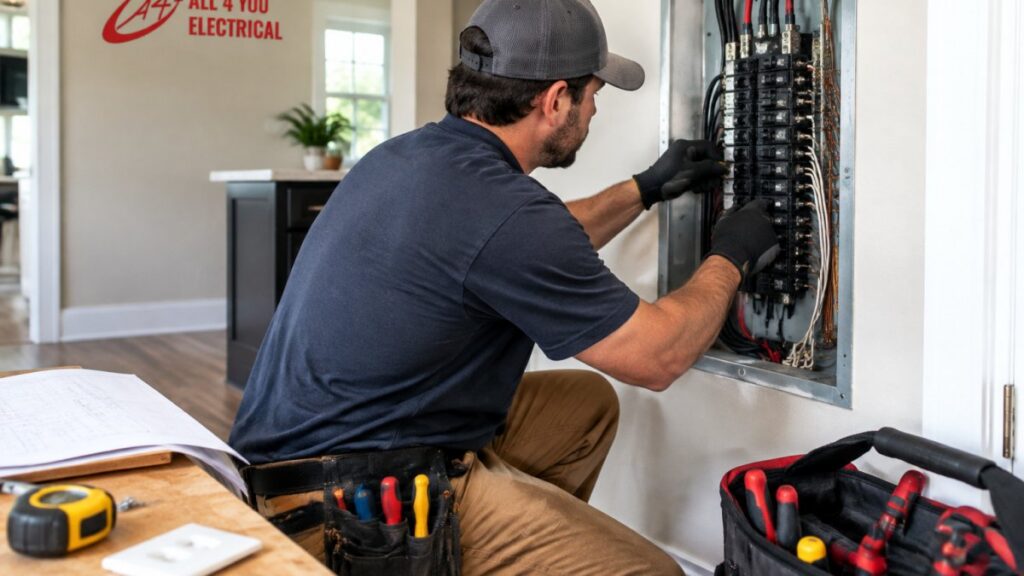
Quick Summary
To prepare home electrical work, clear a path at least three feet wide to the work area and keep three feet of space clear in front of the electrical panel. Move furniture and stored items away from outlets and switches, and note which devices or breakers are affected and when problems occur. Do not open the panel or attempt repairs yourself.
- Clear a path at least three feet wide from the front door to the work area.
- Keep at least three feet of clear space in front of the electrical panel.
- Note which outlets, lights, or breakers are affected and when problems happen.
- Plan for several hours without power during a panel upgrade or replacement.
- Do not open the panel cover, handle exposed wiring, or repeatedly reset tripping breakers.
Table of Contents
- What Electrical Work Usually Involves at Your Home
- What to Do Before an Electrician Arrives
- How to Prepare for an Electrical Panel Upgrade
- Preparing Your Household: Power Shutoffs, Pets, and Work-From-Home Routines
- Questions to Ask an Electrician Before Work Begins
- How Long Electrical Work Takes and What to Expect on Site
- Booking Your Electrical Work Visit With All 4 You Electrical
- Frequently Asked Questions
What Electrical Work Usually Involves at Your Home
Electrical work at home ranges from a small outlet repair to a full service panel replacement. Knowing what the job involves helps you prepare for electrical work the right way.
Common residential jobs include replacing or adding outlets and switches, installing new light fixtures, troubleshooting circuits that trip or lose power, and upgrading the main electrical panel. Larger projects like adding an EV charger or a backup generator also fall under this umbrella.
Some jobs are quick, while others take days. Knowing which category your project falls into makes it easier to plan around it.
What to Do Before an Electrician Arrives
Before the electrician shows up, take a few simple steps. These steps keep the visit safe and help the work go faster. Most of them take less than an hour, and the payoff is a visit that starts on time instead of stalling while someone moves boxes.
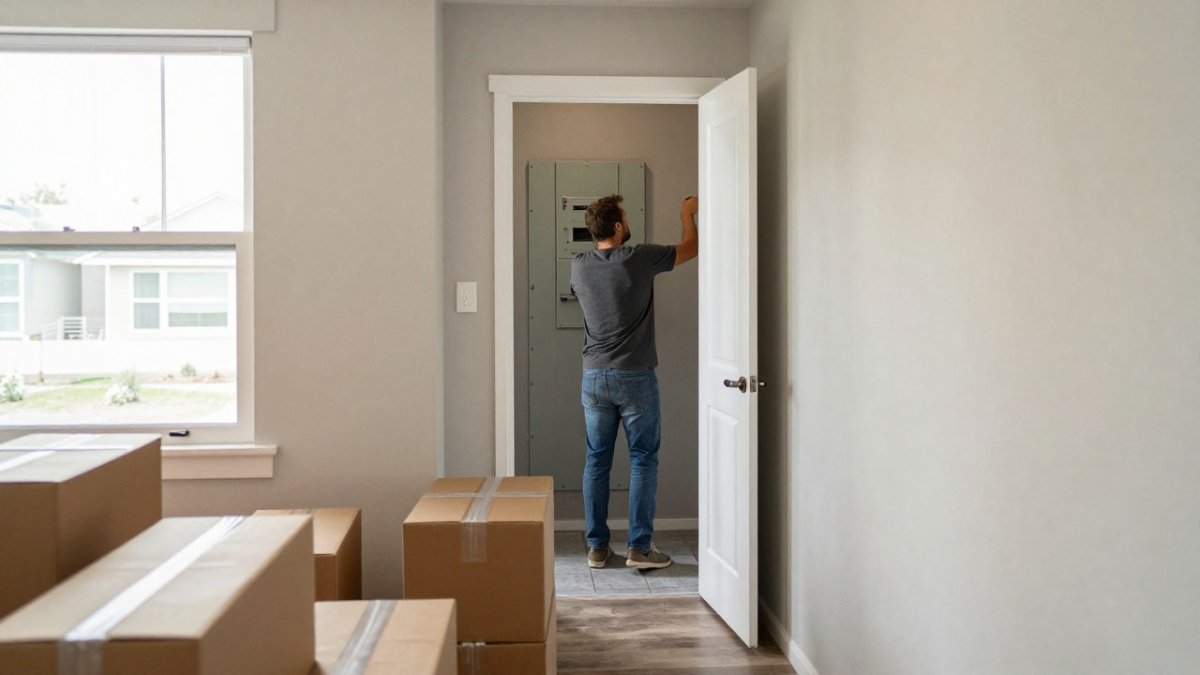
Start with a general-purpose checklist that works for almost any visit:
- Clear a path at least three feet wide from the front door to the work area, including hallways and stairs
- Move furniture, boxes, and storage away from outlets, switches, and the electrical panel
- Note which outlets, lights, or switches are affected, and write down what you observed and when
- Make sure pets and children have a safe place to stay during the visit
- Confirm someone will be home to unlock doors and answer questions
- Put away valuables and fragile items near the work area
- Have the name and phone number of the electrician’s office handy in case of a schedule change
Writing down the problem ahead of time can make the visit go more smoothly. A short note with the date and symptoms gives the electrician useful details right away.
A Checklist by Job Type
Different electrical visits ask different things of you. Use the list below to match your preparation to the work scheduled.
- Outlet, switch, or fixture repair: Clear access to the specific device, note whether the circuit is on or off, and remove anything hanging near the fixture.
- Circuit troubleshooting: Write down when the problem happens, which rooms lose power, and whether any breaker feels warm or trips at the same time each day.
- Panel upgrade or replacement: Plan for a multi-hour shutoff, clear at least three feet in front of and beside the panel, and confirm who is pulling the permit.
- New circuit (EV charger, hot tub, shop outlet): Identify the proposed location, clear a path for cable routing, and ask whether the electrician needs attic, crawlspace, or garage access.
- Whole-home rewiring or inspection: Expect room-by-room access over several days, and plan to move furniture away from walls in affected rooms.
What Not to Do Before the Electrician Arrives
Some well-meaning preparation creates hazards. Keep these boundaries in mind:
- Do not open the electrical panel cover or remove deadfronts
- Do not handle exposed wiring or attempt repairs yourself
- Do not repeatedly reset a breaker that keeps tripping
- Do not spray water or cleaners near outlets, switches, or the panel
- Do not tape over or paint outlets and switches you want the electrician to inspect
Watch out: If you see scorch marks, smell burning, or find water contacting electrical equipment, stop and call the electrician before touching anything. Those signs point to a hazard that needs professional attention, not a DIY fix.
Clearing Access to the Electrical Panel and Work Area
The electrical panel must stay open and easy to reach. A common mistake is storing items in front of the panel, which can block the electrician and create a safety problem. Keep at least three feet of clear space in front of the panel, and remove anything stored on shelves or hooks nearby.
Clear the room where the work will happen, too. Move rugs, curtains, and loose items away from the wall. Cover floors and furniture that cannot be moved. This keeps dust and debris from settling where it is hard to clean later.
Identifying Affected Outlets, Lights, and Switches
Mark the outlets, lights, and switches involved in the problem. Use painter’s tape or a sticky note so the electrician knows exactly where to look. If a breaker keeps tripping, note which breaker it is and which room it powers.
Do not try to test or repair the wiring yourself. Turning breakers on and off to find the problem can make things harder to diagnose. Simply describe what you noticed and when it happens.
Use this table to match your preparation to the type of electrical visit you have scheduled.
| Job type | What to prepare | Key note |
|---|---|---|
| Outlet, switch, or fixture repair | Clear access to the device; note circuit status | Remove anything hanging near the fixture |
| Circuit troubleshooting | Log when the problem happens and which rooms lose power | Note which breaker trips and what else was running |
| Panel upgrade or replacement | Plan for a multi-hour shutoff; clear space around panel | Keep at least three feet clear; confirm who pulls the permit |
| New circuit (EV charger, hot tub, shop outlet) | Identify location; clear cable routing path | Ask about attic, crawlspace, or garage access |
| Whole-home rewiring or inspection | Plan for room-by-room access over several days | Move furniture away from walls in affected rooms |
How to Prepare for an Electrical Panel Upgrade
A panel upgrade is one of the larger electrical projects a homeowner can schedule. Coordinating these logistics effectively ensures that your residence remains safe and functional throughout the transition, a process detailed further by Coast 2 City Electrical.
Start by confirming the scope of the job. Ask what size panel is being installed and whether any circuits will be rerouted. Then plan around the shutoff.
Check whether the project needs a permit.
Clear the area around the panel, as described earlier. If the panel sits in a garage or utility room, remove stored items so the crew can move freely.
Preparing Your Household: Power Shutoffs, Pets, and Work-From-Home Routines
Electrical work affects everyone in the home, not just the person who scheduled it. Plan for the people and routines that depend on power, and the shutoff becomes a minor inconvenience instead of a disruption.
- Power shutoffs: Tell everyone when the power will go off, and which devices will be unavailable. Confirm the expected window with the electrician the day before.
- Pets: Keep dogs and cats in a quiet room away from tools and open panels. Some animals become anxious around unfamiliar voices and equipment, so a closed door and a familiar blanket help.
- Work-from-home schedules: Save important files, charge laptops and phones in advance, and plan calls around a possible outage. A charged power bank keeps a phone usable through a multi-hour shutoff.
- Medical devices: If someone relies on powered equipment, speak with the electrician about timing and have a backup plan in place before the visit. Do not assume the crew can shorten a shutoff once work begins.
- Food safety: Keep refrigerator and freezer doors closed during the outage. Freeze containers of water ahead of time to extend that window.
Many households find it helpful to set up a backup spot for work, such as a coffee shop or a friend’s office, on shutoff days. This keeps deadlines on track without frustration.
Planning Around the Appointment
Think through the day from arrival to departure. Clear a parking spot if possible, unlock gates, and make sure outdoor lights or path lighting work so the crew can find the entrance after dark. If you live in Eagle, you can view our Eagle electrical services, including panels, EV chargers, and generators, before booking.
If the work involves noise, such as drilling or fishing cable through walls, warn household members ahead of time. If a room will be unavailable for several hours, move what you need out of it the night before.
Renters, Landlords, and Shared Buildings
Not every reader can authorize work or arrange access alone. If you rent, confirm with your landlord who is responsible for scheduling the electrician and who will be present.
If you own a unit in a shared building, ask the electrician whether the panel or meter is in a common area and whether building management needs notice.
Landlords should give tenants written notice of the visit and the expected power window, and arrange access to any locked utility rooms.
Questions to Ask an Electrician Before Work Begins
Asking good questions before the work starts helps avoid surprises. A reliable electrician will answer them clearly.
- What exactly will you do, and which areas of the house will be affected?
- How long will the power be off, and will I get notice before it happens?
- Do you need a permit, and who will pull it?
- Will the work include an inspection, and when will it happen?
- Will you clean up dust and debris when you finish?
- Is the estimate free, and will I see the full cost before work starts?
Write down the answers. If anything changes during the job, you will have a record to refer back to.
How Long Electrical Work Takes and What to Expect on Site
On the day of the visit, expect the electrician to arrive, walk through the problem with you, and explain the plan. Work usually starts with turning off power to the affected circuits. The crew will then complete the work, test the new connections, and restore power.
Do not expect the electrician to handle household tasks like moving furniture. Your preparation keeps the visit on schedule.
Booking Your Electrical Work Visit With All 4 You Electrical
Preparing your home is the first step. The next step is finding an electrician you can trust. At All 4 You Electrical, we provide residential, commercial, and industrial electrical services across the Boise and Meridian, Idaho areas. Our family-owned team has more than a decade of experience with panel upgrades, generator installations, and smart home setups.
We offer free estimates upfront, and we leave your property clean after service. Contact us to schedule your visit and get started on the right foot.
Last Updated: November 17, 2026
Frequently Asked Questions
Do I need to turn off the power before an electrician arrives?
Not usually. Electricians normally handle power shutoffs themselves, using the main breaker or a utility disconnect when the work requires it. Before the visit, avoid switching breakers on or off yourself unless the electrician asks you to, and make sure the panel is reachable. If you have medical equipment or a sump pump that depends on power, tell the electrician and plan a backup before work starts so you are not caught off guard during a shutoff.
Should I move furniture before electrical work?
Yes, clear a path of at least three feet around the electrical panel and any outlets, switches, or fixtures that will be worked on. Remove furniture, rugs, stored boxes, and wall hangings from those areas. Move sensitive electronics and anything valuable out of the room. Clearing space protects your belongings from dust and accidental damage and lets the electrician work safely and efficiently without delay.
How do I prepare for an electrical panel upgrade?
Confirm the appointment time and plan for a possible power interruption during the visit. Clear the wall around the panel, label circuits if you know them, and unplug computers, medical devices, and appliances with sensitive electronics. Ask the electrician which appliances, such as refrigerators or freezers, should be unplugged or moved. Keep pets and children away from the work zone, and arrange a place for household members to stay if the power will be off for long.
How long does electrical work take?
The time depends on the scope of the work. Ask for an estimated timeline during the free estimate. Ask for that estimate in writing, and ask what could extend the schedule, such as inspection requirements or unexpected wiring conditions found during the job.
