
Table of Contents
- Start With a Room-by-Room Electrical Upgrade Checklist
- Electrical Panel Upgrade Checklist: What to Do Before Work Begins
- What to Expect During an Electrical Panel Upgrade
- How Long Does an Electrical Panel Upgrade Take?
- Electrical Panel Upgrade Cost: What Drives the Price
- Homeowner vs. Electrician Responsibilities: Who Handles What
- Post-Work Verification and Handoff: Your Final Walkthrough
- Frequently Asked Questions
Last Updated: October 6, 2026
Start With a Room-by-Room Electrical Upgrade Checklist
Preparing your home for electrical upgrades starts long before an electrician arrives. The work goes faster, costs less, and creates far less mess when you clear the path first. This guide from All 4 You Electrical walks through exactly what to do, room by room, before any panel or wiring work begins.
Most homeowners focus on the big decisions: panel size, new circuits, EV chargers. The practical prep gets ignored until the morning of the job. That is a mistake. A little planning in advance saves hours of labor and a week of cleanup.
Here is a checklist to consider:
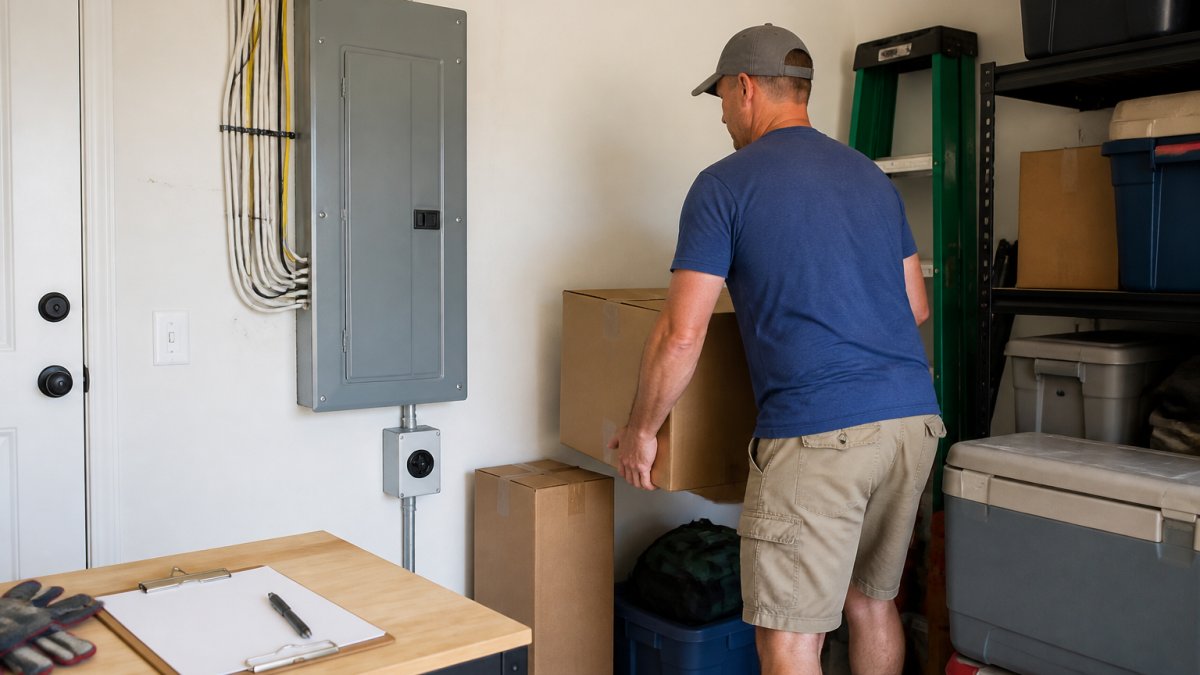
- Clear a 3-foot working zone around the main service panel
- Move furniture, boxes, and stored items away from walls where outlets will change
- Remove wall art, mirrors, and shelves near work areas
- Unplug sensitive electronics in rooms where power will cycle
- Note every outlet, switch, or fixture you want added or moved
- Confirm pets and kids have a safe area away from the work zone
- Ask about access needs for attics, crawl spaces, and basements
Clear Access to the Main Service Panel
The service panel needs breathing room. Electrical codes require a clear working space in front of it, and the team working on it needs that same space to work safely. Pull cars out of the garage if the panel lives there. Stack nothing against it.
Document What You Want Changed
Walk your home and write down every change you want, room by room. Note dead outlets, flickering lights, and spots where you want USB ports or extra circuits. A written list prevents mid-job surprises. It also helps your electrician give you an accurate estimate up front.
Room-by-Room Prep: What Actually Has to Move
A whole-home checklist beats a generic one because every room hides a different obstacle. Use this as your walkthrough script the week before work starts.
Kitchen. Empty the cabinets under the sink and along the wall where new circuits or a dedicated appliance line will run.
Garage. This is where most delays happen. Clear the wall in front of the panel to a 3-foot depth, and move shelving, bikes, and stored totes away from any wall where conduit or a new EV charger circuit will run.
Basement and utility areas. Clear a path to the panel, the water heater, and the furnace shutoff.
Attic and crawl space. Confirm the hatch or access door opens fully and is not blocked by stored items.
Bedrooms and living areas. Move beds, couches, and desks away from walls where outlets, switches, or ceiling fixtures are changing. Take down wall art, mirrors, and shelves within a few feet of the work.
Home office and medical equipment. If anyone works from home or relies on powered medical equipment, identify those devices now.
Outdoor and garage-adjacent spaces. Move patio furniture, grills, and garden tools away from exterior outlets, EV charger locations, and any exterior conduit path.
Take photos of your current panel and any problem areas before work starts. They help your electrician plan, and they give you a clear before-and-after record for your own files.
Electrical Panel Upgrade Checklist: What to Do Before Work Begins
A good electrical panel upgrade checklist covers three things: access, documentation, and safety. Handle all three before the crew arrives, and the job moves quickly.
- Access: Clear the panel, the attic hatch, and the crawl space entry
- Documentation: Gather your wish list, any prior inspection reports, and photos of current wiring
- Safety: Move valuables, cover furniture near work zones, and secure pets
One detail most people miss: the panel itself may be behind shelving, a water heater, or storage. Move that first. It is the single biggest cause of delay on upgrade day.
What to Expect During an Electrical Panel Upgrade
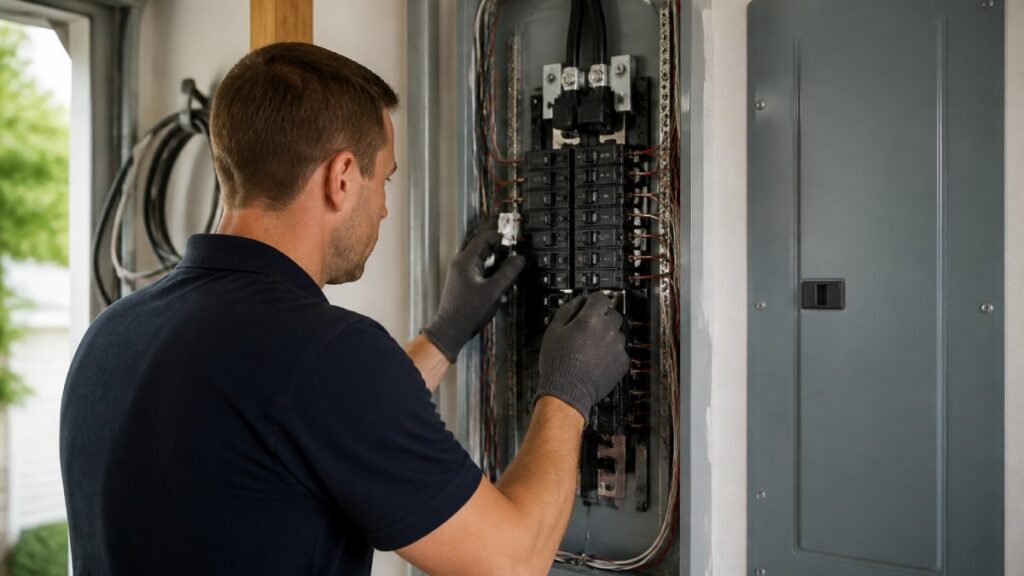
Expect the power to be off for most of the day. The crew will remove the old panel, install the new one, and reconnect every circuit. Plan for no lights, no fridge, and no internet during the work window.
Here is what a typical day looks like:
- The electrician arrives and confirms the scope
- Power is shut off at the meter
- The old panel is removed and the new one is mounted
- Circuits are labeled and reconnected
- The system is tested and power is restored
You should expect some noise, dust, and foot traffic. Ask your electrician how they protect floors and furniture. That is a fair question, and a good crew will have an answer ready.
Will the Power Be Shut Off?
Yes. The power must be off while the panel is swapped. Most upgrades take a full day, so plan meals, work, and refrigeration around that window. If anyone in the home relies on powered medical equipment, tell your electrician before the appointment so they can plan around it.
How Long Does an Electrical Panel Upgrade Take?
Most electrical panel upgrades take one full working day. A straight swap of a like-for-like panel often finishes in four to six hours. Add time for a service upgrade, new circuits, or rewiring, and the job can stretch to two or three days.
A few things affect the timeline:
- Panel size and amperage
- Whether the service feed also needs an upgrade
- Condition of existing wiring
- Permit and inspection scheduling
- Access to the panel and work areas
Ask for a time estimate in writing before work begins. A clear schedule helps you plan around the outage.
Electrical Panel Upgrade Cost: What Drives the Price
Electrical panel upgrade cost depends on the scope, not a flat rate. Several factors move the number up or down:
- Panel amperage and brand
- Whether the service mast or meter base needs replacement
- Permit and inspection fees
- New circuits, outlets, or dedicated lines
- Condition of existing wiring
- Access difficulty
Because every home is different, we give free upfront estimates so you know the full picture before you commit. No surprise charges after the fact.
Never let anyone start electrical work without a written estimate and a clear scope. Verbal quotes lead to disputes, and unpermitted work can fail inspection and cost far more to fix later.
Homeowner vs. Electrician Responsibilities: Who Handles What
Knowing who does what keeps the job on track and keeps you safe. The line is not arbitrary: it follows licensing law, the National Electrical Code, and the physical reality that energized conductors and service equipment can kill. Here is the split we use on every project, with the reasoning behind each row.
| Task | Homeowner | Electrician |
|---|---|---|
| Clear access to panel and work areas | Yes | No |
| Move furniture, valuables, and stored items | Yes | No |
| Choose finishes, fixture styles, and outlet locations | Yes | No |
| Pull permits | No | Yes |
| Perform load calculations | No | Yes |
| Install panel, wiring, and devices | No | Yes |
| Schedule and pass inspection | No | Yes |
| Final cleanup and debris removal | Partial | Yes |
What You Can Safely Do Before the Crew Arrives
Your job is preparation and access, and it is genuinely useful work. Clearing the panel zone, moving furniture, emptying cabinets, and documenting your wish list all reduce labor hours, which reduces your bill. You can also:
- Choose fixture styles, outlet colors, and switch plate finishes so the electrician is not guessing
- Decide where you want USB outlets, smart switches, or dedicated circuits
- Confirm which household members need power during the outage and flag medical equipment
- Gather any prior inspection reports, warranty paperwork, or panel photos
- Arrange parking so the crew can reach the meter and panel
None of these tasks involve opening a panel, removing a device, or touching a conductor. That is the dividing line.
What Must Stay With a Licensed Electrician
Several tasks are not just difficult, they are restricted by law and by physics:
- Permits and inspections. Most jurisdictions require a permit for panel replacements, service upgrades, and new circuits. A licensed electrician pulls the permit and schedules the inspection because the work has to be performed and signed off by a qualified party.
- Load calculations. Sizing a service or panel correctly requires a documented calculation based on square footage, appliance load, and demand factors. Guessing leads to nuisance tripping or an undersized service.
- Service equipment and panel work. The service entrance, meter base, main breaker, and panel interior remain energized or can become energized. This is not a homeowner task in any circumstance.
- New circuit wiring and device installation. Running conductors, making terminations, and installing breakers all fall under licensing requirements and code compliance.
- Grounding and bonding. Improper grounding is a shock and fire hazard that may not show up until something goes wrong. It has to be done to code.
Questions to Ask Before You Sign
A short list of questions during the estimate tells you whether the split is clear on both sides:
- Who pulls the permit, and will I get a copy?
- What is the exact scope, and what is excluded?
- How long will power be off, and which circuits will be affected?
- How will you protect floors, furniture, and finished surfaces?
- What happens if the existing wiring fails inspection mid-job?
- Who cleans up, and what does cleanup include?
A good crew answers all six without hesitation. The clearer the split, the smoother the day.
Post-Work Verification and Handoff: Your Final Walkthrough
The job is not done until you have walked through it. Ask your electrician to show you the labeled panel, confirm every circuit works, and walk you through any new breakers. Test the outlets and fixtures you asked for.
A proper handoff includes:
- A labeled panel with every circuit named
- A walkthrough of all new work
- Confirmation that power is stable
- Inspection paperwork if required
- A clean work area with no debris left behind
At All 4 You Electrical, we leave the property clean and walk you through everything before we go. Our 5.0 Google rating across 123 reviews reflects that standard.
Frequently Asked Questions
How do I prepare my home for an electrical upgrade?
Start by clearing at least three feet of space around the main service panel and any subpanels. Remove furniture, boxes, and stored items from those areas. Make a list of rooms and specific outlets, switches, or fixtures you want addressed. Note any known issues like flickering lights or dead outlets. If you plan to add an EV charger or heat pump, gather those details. Confirm your electrician’s arrival window and ask whether the power will be off for part or all of the day.
Will power be shut off during an electrical panel upgrade?
Yes, the main power will be shut off while the electrician works on the service panel. Most panel upgrades require a full-day outage, typically 4 to 8 hours. Your electrician will tell you the expected window in advance so you can plan for refrigerated food, medical equipment, or home office needs. For smaller upgrades like adding a dedicated circuit, the outage is usually shorter and may only affect one area of the home.
Do I need to move furniture before electrical work begins?
You do not need to empty entire rooms, but you should clear a path to the work area. Move furniture away from the service panel, any outlets being replaced, and the path your electrician will use to carry tools and materials. Cover or move delicate items in nearby rooms to protect against dust. If the upgrade includes running new wiring through walls or the attic, remove items from closets or shelves along that route.
What should I ask an electrician before upgrading my electrical system?
Ask for a written estimate that breaks down labor, materials, permits, and any inspection fees. Confirm whether the price includes patching or drywall repair after the work. Ask how long the job will take and whether the power will be off the entire time. Find out who pulls the permit and schedules the inspection. Ask about cleanup: will they haul away old panel parts and vacuum dust? Finally, request a copy of the load calculation so you understand your new capacity.
A panel upgrade is one of those projects where preparation makes all the difference. The homeowners who plan ahead get faster work, cleaner results, and fewer surprises. All 4 You Electrical handles residential and commercial electrical work across the Treasure Valley, with free upfront estimates, a family-owned team, and a promise to leave your property clean. Get started with All 4 You Electrical and schedule your free estimate today.