
Table of Contents
- What Is Smart Home Electrical System Integration
- How Electrical Systems and Smart Home Automation Work Together
- Smart Home Wiring Requirements for Your Installation
- Smart Home Electrical Upgrades: Planning Your System
- Smart Home Lighting Integration and Control
- Smart Home System Compatibility and Protocol Standards
- Electrical Code, Safety, and Professional Installation
- Frequently Asked Questions
Last Updated: October 14, 2026
What Is Smart Home Electrical System Integration
Smart home electrical system integration is the process of connecting your home’s traditional electrical infrastructure with modern automation devices and control systems. It allows you to manage lighting, climate control, appliances, and security through centralized hubs, mobile apps, and voice commands.
At All 4 You Electrical, we help homeowners understand that integration isn’t simply about buying smart bulbs or a connected thermostat. It requires planning your wiring, understanding communication protocols, and often upgrading your electrical panel to support the additional load and control systems.
Integration typically involves two layers: the physical electrical infrastructure (wiring, circuits, panel capacity) and the digital control layer (hubs, protocols, automation logic). Your existing wiring may support smart devices, but retrofitting a full system into an older home often requires additional low-voltage wiring, dedicated circuits for high-demand devices, and potentially a panel upgrade. New construction offers the advantage of designing both layers from the start.
How Electrical Systems and Smart Home Automation Work Together
Your home’s electrical system provides power to devices, while automation systems provide intelligence and control.
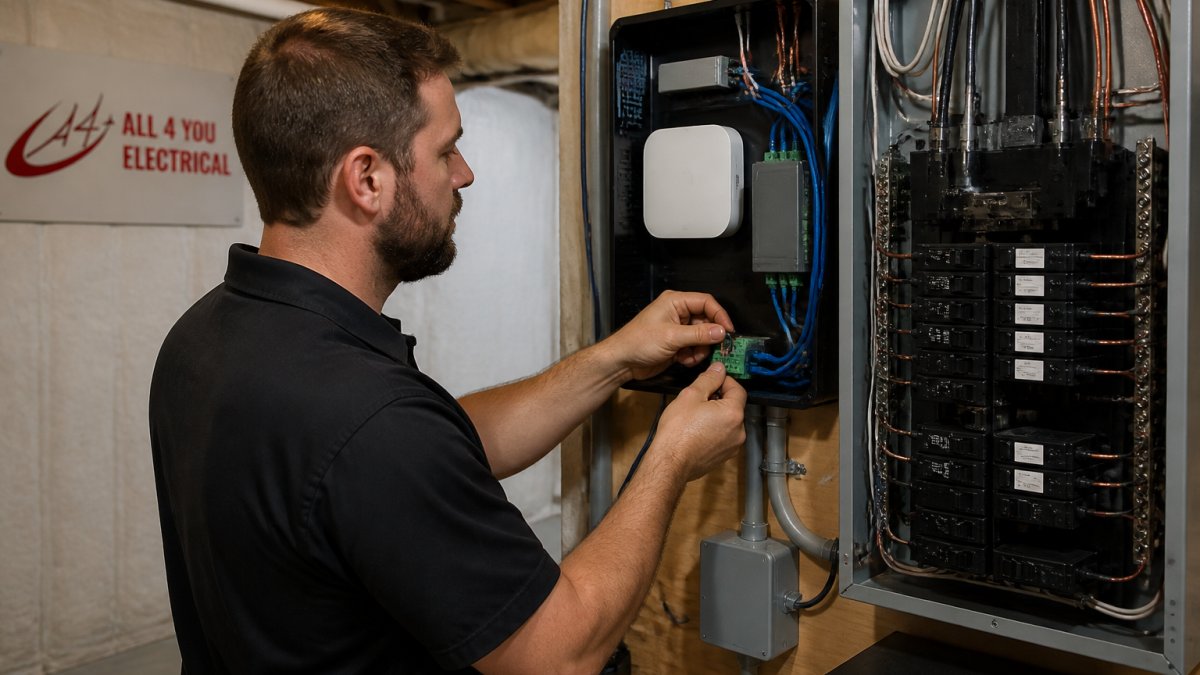
Traditional electrical systems are essentially one-way: you flip a switch, current flows through a circuit, and a device turns on. Smart integration adds feedback loops. A motion sensor detects occupancy and signals a relay to energize lights.
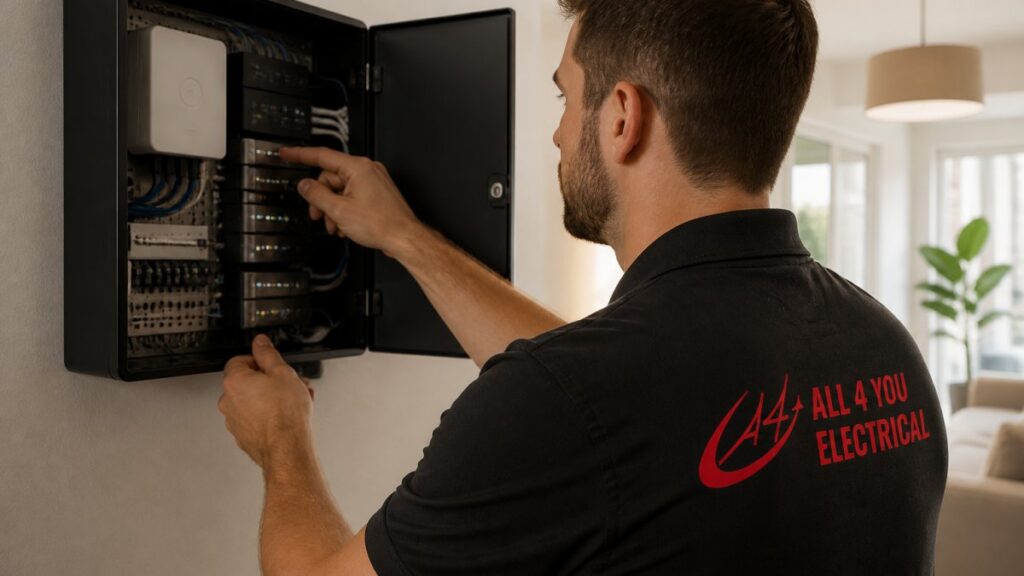
Most integrated systems use a hub or controller as the central nervous system. This device communicates with smart switches, outlets, sensors, and appliances using wireless protocols like Zigbee, Z-Wave, or WiFi, or through hardwired low-voltage control lines.
The physical integration requires understanding load calculations. A panel designed for baseline power delivery may struggle if you add multiple high-demand smart devices simultaneously. Electric vehicle chargers, smart heat pump systems, and whole-home backup batteries all draw significant current.
Smart Home Wiring Requirements for Your Installation
Smart home integration demands two distinct wiring systems working in parallel: high-voltage power circuits and low-voltage control wiring. Many homeowners don’t realize this distinction until they’re mid-project, which is why planning matters.
High-voltage circuits follow standard electrical code and deliver power to outlets, switches, and appliances. These typically run 120V or 240V and must be sized appropriately for the devices they serve. Smart outlets and smart switches still use these same circuits; they simply add control intelligence on top.
Low-voltage control wiring carries signals between sensors, controllers, and smart devices. This wiring typically runs 24V or lower and is not subject to the same spacing and conduit requirements as power circuits, though it must still follow code. Common low-voltage systems include:
- Dedicated sensor lines connecting motion detectors, door/window sensors, and occupancy sensors to a central controller
- Communication lines for protocols like Zigbee or Z-Wave (often wireless, but some installations use wired mesh networks)
- Thermostat wiring connecting HVAC equipment to smart thermostats
- Audio/video lines for integrated entertainment systems
The key requirement is physical separation. High-voltage and low-voltage wiring should not run through the same conduit or be bundled together, as power lines generate electromagnetic interference that degrades signal quality.
Cable routing during installation is critical. Conduit should be sized to allow future additions without overcrowding. Running extra empty conduit during initial work costs little but saves thousands later if you want to expand the system. Electrical code in your area specifies minimum requirements; exceeding them provides flexibility.
Smart Home Electrical Upgrades: Planning Your System
Effective planning prevents costly rework and ensures your system grows with your needs. Start by auditing your current electrical infrastructure: panel capacity, circuit availability, grounding, and existing wiring condition. Older homes with 100-amp service may need an upgrade to 200 amps if you’re adding significant smart loads like EV chargers or heat pumps alongside automation.
Identify which devices and systems you want to integrate. Prioritize based on impact and complexity. Lighting and climate control typically deliver the most immediate benefit and are good starting points. Security integration, energy monitoring, and appliance automation can follow. This phased approach lets you learn the system before expanding.
Consider your automation hub choice early, as different platforms have different wiring and integration requirements. Some systems work primarily wireless, while others benefit from wired backbone networks for reliability. The hub you select influences which smart devices you can use and how they communicate.
New Construction vs. Retrofitting Existing Wiring
New construction allows you to design smart home electrical integration from the ground up. You can run all necessary low-voltage conduit, plan adequate panel capacity, and position outlets and switches strategically before drywall closes walls.
During new construction, work with your electrician to plan dedicated circuits for high-draw smart devices. A 240V circuit for an EV charger or smart water heater should be independent of general lighting circuits. This prevents smart automation from triggering nuisance breaker trips due to combined loads.
Retrofitting existing homes presents challenges but remains feasible. Running new low-voltage wiring through finished walls often requires fishing lines through cavities or surface-mounted conduit. Upgrading panel capacity means cutting into the main service disconnect, work that must be done by a licensed electrician.
All 4 You Electrical frequently works with homeowners retrofitting older properties. The most practical approach is to upgrade your panel first if needed, then prioritize smart device installation in areas where you can run wiring with minimal disruption.
Smart Home Lighting Integration and Control
Smart lighting is often the entry point for home automation because it’s visible, intuitive, and doesn’t require major infrastructure changes. However, integrating lighting properly means understanding the difference between smart bulbs, smart switches, and smart fixtures.
Smart bulbs contain built-in wireless radios and can be controlled individually or in groups. They work in standard sockets and don’t require rewiring.
Smart switches replace existing switches and control power to conventional bulbs or fixtures. They work reliably because they’re hardwired into the circuit.
Integrated lighting systems combine smart switches with occupancy sensors, daylight sensors, and scheduling logic. A motion sensor in a hallway can trigger lights to 50% brightness at night and full brightness during the day.
Wiring for smart lighting typically involves standard 120V circuits with smart switches or outlets replacing conventional ones. Some advanced installations add dedicated low-voltage lines for sensor inputs, allowing the lighting system to respond to motion, occupancy, and ambient light without wireless latency.
Smart Home System Compatibility and Protocol Standards
One of the most overlooked aspects of smart home electrical system integration is protocol compatibility. Different devices use different communication standards, and not all standards play well together.
Zigbee is a mesh-networking protocol that’s reliable, low-power, and widely supported. Devices connect through a coordinator hub and relay signals through other devices, extending range.
Z-Wave functions similarly to Zigbee and is common in security and automation. It operates on a different frequency band and has slightly different range characteristics, but the user experience is comparable.
WiFi offers simplicity because your home already has WiFi infrastructure. Smart devices connect to your router directly.
Thread is a newer mesh standard gaining adoption in consumer devices. It’s designed for low power and high reliability, particularly for battery-powered sensors.
Compatibility becomes critical when you select your central hub. A hub that supports Zigbee cannot control Z-Wave devices natively. Some hubs bridge multiple protocols, but this adds complexity and potential latency.
All 4 You Electrical recommends planning your protocol strategy during the electrical design phase.
Electrical Code, Safety, and Professional Installation
Smart home electrical system integration must comply with the National Electrical Code (NEC) and local amendments. Code compliance ensures safety, proper grounding, overcurrent protection, and reliable operation.
Key code considerations for smart home integration include proper circuit sizing for combined loads, adequate grounding for low-voltage control systems, and correct conduit sizing and fill ratios.
Low-voltage wiring has fewer code constraints than power circuits, but it still requires proper routing, support, and identification.
Backup power systems, such as batteries or generators integrated with smart automation, add complexity. These systems require additional disconnects, transfer switches, and code-compliant installation.
Professional installation from All 4 You Electrical ensures your system meets code, functions reliably, and is safe for your family.
Smart home electrical system integration transforms how you live by automating comfort, security, and energy management. The foundation for success is proper planning of your electrical infrastructure, wiring, and device compatibility.
All 4 You Electrical has over a decade of experience helping homeowners and businesses integrate smart technology into their electrical systems.
Frequently Asked Questions
What wiring is required for a smart home electrical system?
Smart home systems typically use two types of wiring: high-voltage wiring for power delivery to outlets and switches, and low-voltage wiring for communication between smart devices. Low-voltage wiring (typically Cat5e or Cat6 Ethernet cable) carries data signals between your automation hub, smart switches, and connected devices. High-voltage wiring must meet National Electrical Code (NEC) standards and be installed by a licensed electrician. The specific wiring depends on your system design, whether you’re wiring during new construction or retrofitting an existing home, and which smart home devices you plan to integrate.
Can you add smart home technology to an existing electrical system?
Yes, you can retrofit smart home technology into existing wiring, though it may require upgrades. Many existing homes built before 2010 have adequate electrical infrastructure for basic smart devices like smart switches and outlets. However, comprehensive smart home integration may require upgrading your electrical panel, adding dedicated circuits, or running new low-voltage communication wiring. The feasibility depends on your home’s age, current panel capacity, and the scope of automation you want. A licensed electrician can assess your existing system and recommend necessary upgrades.
What electrical upgrades may be needed for a smart home?
Common electrical upgrades for smart home integration include expanding your electrical panel to accommodate additional circuits, installing dedicated circuits for high-demand smart appliances like EV chargers or HVAC systems, running new low-voltage wiring for communication protocols, and upgrading outlets and switches to smart-enabled versions. If your home’s main panel is at capacity or uses outdated wiring, you may need a full panel upgrade. Energy monitoring systems may also require new circuits. The specific upgrades depend on your home’s current capacity, age, and the smart devices you plan to install.
How do smart home devices communicate with each other?
Smart home devices communicate through wireless protocols like WiFi, Zigbee, Z-Wave, or Thread, or through wired low-voltage communication networks. WiFi-enabled devices connect directly to your home network, while Zigbee and Z-Wave use mesh networks that extend range through multiple devices. Thread is a newer protocol designed for low-power IoT devices. Your smart home automation hub acts as the central control point, receiving signals from sensors, switches, and voice assistants, then sending commands to connected devices. The choice of protocol affects device compatibility, so selecting devices that work within your chosen ecosystem is critical.
Should a licensed electrician install smart home wiring and equipment?
Yes, a licensed electrician should handle all high-voltage wiring, electrical panel work, and any modifications to your home’s main electrical system. While some smart devices like smart bulbs or plugs can be installed by homeowners, integrating them into a comprehensive smart home electrical system requires professional expertise. Electricians ensure your installation meets National Electrical Code (NEC) standards, obtain necessary permits, and verify that your electrical panel has adequate capacity. Professional installation protects your home’s safety, maintains warranty coverage, and ensures reliable long-term performance of your smart home system.
What is the difference between wired and wireless smart home systems?
Wired smart home systems use low-voltage communication cables (typically Ethernet) running through your walls to connect devices to a central hub, offering reliability and security but requiring more installation work. Wireless systems use WiFi, Zigbee, or Z-Wave protocols, making them easier to install and expand but potentially more susceptible to interference. Most modern smart homes use hybrid systems combining both wired and wireless elements. Wired systems are often preferred for critical functions like lighting and HVAC, while wireless devices handle secondary automation. Your choice depends on your home’s layout, renovation scope, and long-term scalability goals.
How does smart home system compatibility affect my electrical installation?
System compatibility determines whether your smart devices can communicate with each other and your automation hub. Different manufacturers use different protocols (WiFi, Zigbee, Z-Wave, Thread), and devices must share compatible protocols to work together. Before installation, choose your primary ecosystem (Apple HomeKit, Google Home, Amazon Alexa, or platform-agnostic systems) and verify that all devices you plan to integrate support that ecosystem. Compatibility issues can require additional hubs, repeaters, or bridges, adding complexity and cost to your electrical installation. Planning your protocol strategy before wiring ensures a cohesive system and prevents costly rewiring later.