Last Updated: November 10, 2026
Quick Summary
Signs your home wiring needs inspection include breakers that trip repeatedly, lights that flicker or dim, outlets or switches that feel warm or look discolored, burning smells, scorch marks, buzzing from the panel, and worn or exposed wiring. Stop using the affected circuit and call a licensed electrician, treating smoke, sparks, or a hot outlet as an emergency.
- A breaker that trips again and again usually means an overloaded circuit or a failing breaker.
- A burning smell near an outlet or panel is an emergency, not a warning.
- Never open a panel cover or pull an outlet out of the wall to inspect it yourself.
- An inspection is diagnostic, not corrective, so repairs are a separate scope and estimate.
- Homes from the 1970s may still have aluminum branch wiring or a fuse panel instead of breakers.
Table of Contents
- Why Home Wiring Problems Start Small and End Dangerous
- Frequent Tripped Breakers and Overloaded Circuits
- Flickering Lights, Warm Outlets, and Other Warning Signs
- What to Do the Moment You Notice a Warning Sign
- Your Electrical Inspection Checklist Before the Electrician Arrives
- How Much Does an Electrical Inspection Cost and What It Covers
- How Wiring Age and Material Change What Needs Inspecting
- Book a Licensed Electrician to Inspect Your Home Wiring
- Frequently Asked Questions
Why Home Wiring Problems Start Small and End Dangerous
A flickering lamp or a breaker that trips once a month rarely feels urgent. That is exactly what makes home wiring problems so dangerous. The U.S. Fire Administration’s electrical fire data shows that electrical failures remain a leading cause of residential fires, and most start behind a wall where no one can see them.
A “small” symptom can sometimes turn out to be a wire that has been overheating for years. Wiring does not fail all at once. It fails slowly, then suddenly.
Here is the core problem: your electrical system gives warnings, but the warnings look harmless. A warm outlet feels like nothing. A buzzing panel sounds like a minor annoyance. Those are the signs your home wiring needs inspection before a repair becomes an emergency. Below, we break down every warning sign, what to do the moment you spot one, and what a real inspection covers.
Frequent Tripped Breakers and Overloaded Circuits
A breaker that trips once during a heat wave is normal. A breaker that trips again and again is telling you something is wrong.
Frequent tripped breakers usually mean one of two things: an overloaded circuit or a failing breaker. An overloaded circuit happens when you draw more power than the wire can safely carry. Space heaters, hair dryers, and kitchen appliances on one circuit are common culprits. The breaker trips to stop the wire from overheating.
The second possibility is worse. A worn breaker may fail to trip at all, which removes your safety net. If a breaker trips repeatedly, do not just reset it and move on. That habit hides the real problem. We explain the causes in more detail in our guide on why a circuit breaker trips repeatedly, and if you need to reset one tonight, here is how to reset a tripped breaker safely.
Watch out: taping a breaker in the “on” position or replacing it with a larger one is one of the most dangerous DIY moves a homeowner can make. It defeats the protection your home wiring depends on.
Flickering Lights, Warm Outlets, and Other Warning Signs
Flickering lights in one room point to a loose connection. Lights that dim across the whole house when the AC kicks on point to a larger electrical load problem. Both deserve a look.
Warm or discolored outlets and switches are a step up in urgency. Heat at an outlet means resistance, and resistance means the connection is degrading. Discoloration is scorch damage in slow motion.
Burning Smells, Scorch Marks, and Buzzing Sounds
A burning smell near an outlet or panel is an emergency, not a warning. Scorch marks around an outlet or breaker confirm that overheating has already happened. Buzzing sounds from the electrical panel often mean a breaker or connection is arcing inside the box.
Worn, Frayed, and Exposed Wiring
Look for cracked insulation, exposed wire, or chewed casing in basements, attics, and garages. Rodents and moisture exposure are the usual causes. Any exposed wiring is a fire hazard and needs repair, not a patch.
What to Do the Moment You Notice a Warning Sign
Stop using the affected circuit first. Unplug devices, switch the breaker off, and keep everyone away from the outlet or panel until it is checked.
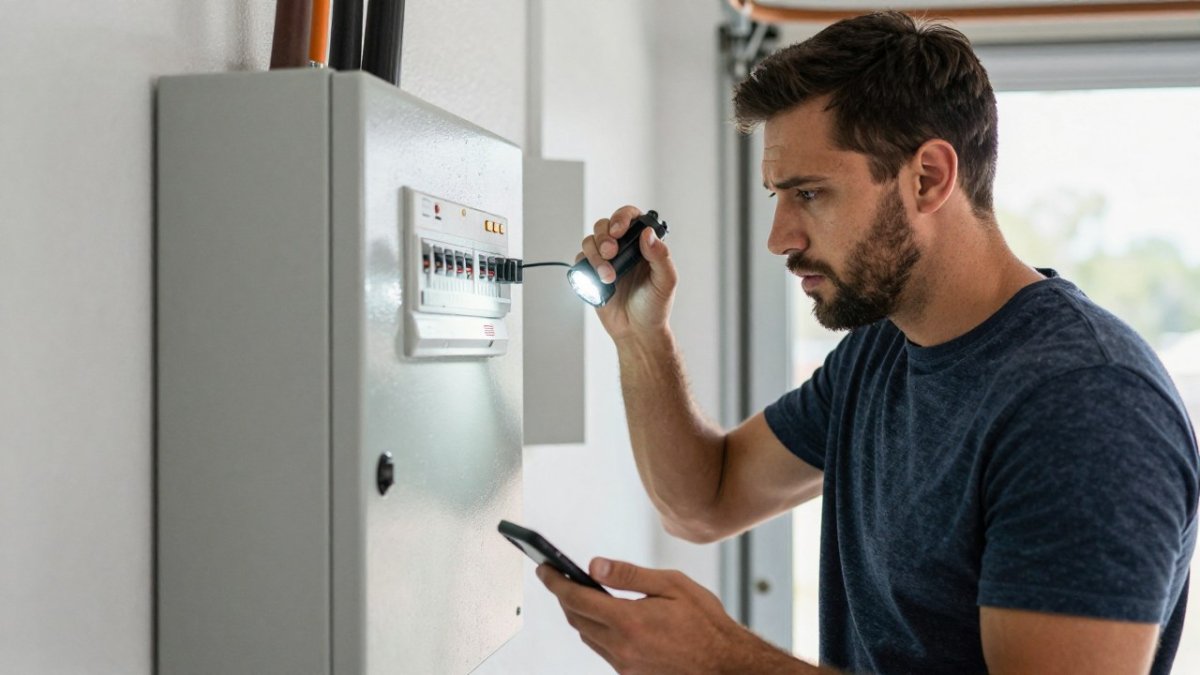
The harder question is not what to do, it is how fast you need to do it. Most warning signs fall into one of three urgency tiers, and knowing which tier you are in keeps you from either panicking over a loose lamp or ignoring a panel that is about to fail.
Tier 1, Call now, and treat it as an emergency. These are active hazards:
- Smoke or a persistent burning smell near an outlet, switch, or panel
- Visible sparks, arcing, or a popping sound from an outlet or breaker
- A panel that is hot to the touch, buzzing loudly, or showing scorch marks
- An outlet or switch plate that is hot, melted, or blackened
- A shock or tingle when you touch an appliance or fixture
For any of these, switch off the affected breaker only if you can reach it safely without touching a hot panel or standing in water, then leave the area and call a licensed electrician. Do not reset the breaker to “test” it.
Tier 2, Schedule within days. These are warning signs that are not active but are trending toward failure:
- A breaker that trips repeatedly on the same circuit
- Lights that flicker in one room or dim across the house when a large appliance starts
- An outlet or switch that feels warm but is not hot or discolored
- A faint hum from the panel that you notice only when the house is quiet
- GFCI outlets that will not reset
Tier 3, Schedule at your next convenient window. These are maintenance items:
- A single lamp that flickers when you bump the cord
- Two-prong outlets in an older home with no other symptoms
- A breaker that tripped once during a heat wave and has been fine since
Watch out: never open a panel cover, pull an outlet out of the wall, or spray anything into a switch to “clean” it. The cover is there because the terminals behind it stay live even with the breaker off in many older panels.
If you smell burning, see sparks, or find a hot outlet, do not wait for a scheduled appointment. Our emergency electrician in Boise, ID team responds to active hazards, and for sparking outlets or sudden power loss, call rather than book online.
Most warning signs fall into one of three urgency tiers, and knowing which tier you are in tells you how fast to act.
| Tier | Signs | Timing |
|---|---|---|
| Tier 1 | Smoke, burning smell, sparks, arcing, hot or blackened outlet, shock or tingle | Call now, treat as an emergency |
| Tier 2 | Breaker trips repeatedly, flickering or dimming lights, warm outlet, faint hum, GFCI will not reset | Schedule within days |
| Tier 3 | Single lamp flickers when cord bumped, two-prong outlets, one breaker trip during heat wave | Schedule at next convenient window |
Your Electrical Inspection Checklist Before the Electrician Arrives
A little prep makes the visit faster and cheaper. Use this electrical inspection checklist before your electrician arrives:
- Write down every symptom: which breaker trips, which outlets feel warm, which lights flicker
- Note when each problem happens (time of day, which appliances were running)
- Clear access to the electrical panel and any outlets the electrician needs to check
- List recent changes: new appliances, a remodel, an EV charger, a hot tub
- Gather the age of the home and any past repair records
- Note any burning smell, scorch marks, or buzzing you have heard
This list helps the electrician identify the fault faster and gives you a clear record of the wiring condition over time.
How Much Does an Electrical Inspection Cost and What It Covers
How much does an electrical inspection cost? Pricing depends on the size of the home, the age of the electrical system, and how many circuits need testing. Visit our website or contact us for a quote.
What most homeowners actually want to know is what the appointment looks like, so here is the practical version.
What the electrician checks. A standard inspection generally includes a visual review and some testing:
How long it takes. Plan to be home for the visit so the electrician can ask which outlets and breakers have been acting up.
What you get afterward. Ask for the findings in writing. That document is also what a future buyer’s inspector will want to see if you sell.
Follow-up repairs. An inspection is diagnostic, not corrective. If the electrician finds a loose neutral, a failing breaker, or a scorched outlet, the repair is a separate scope and a separate estimate. Ask upfront whether the inspection fee is credited toward repair work before you book.
If the inspection turns up a strained panel, you may also need to know whether your panel needs an upgrade.
How Wiring Age and Material Change What Needs Inspecting
Older homes need a closer look. Wiring age and material change what an electrician checks and how urgently.
Homes from the 1970s may still have aluminum branch wiring or a fuse panel instead of breakers. Two-prong outlets without grounding are common in older construction. Each of these raises the risk of overheating and limits what you can safely plug in.
If your home is older, our guide on the electrical checks every older home needs covers the specific items an electrician should test, from grounding to panel capacity.
Book a Licensed Electrician to Inspect Your Home Wiring
The signs your home wiring needs inspection are rarely dramatic. That is the trap. A warm outlet, a tripping breaker, a faint buzz in the panel: each one is easy to ignore until it is not.
If you have spotted any warning sign on this list, do not wait for a repair to become an emergency. All 4 You Electrical is a family-owned team with over 10 years of experience serving homes and businesses in the Boise and Meridian area. We offer free estimates upfront and leave your property clean after the work is done. We have a 5.0 rating on Google from 123 reviews.
Get started with All 4 You Electrical and schedule a home wiring inspection that finds the problem before it finds you.
A warm outlet or a breaker that keeps tripping is your home asking for help. Let our licensed team inspect the system, explain what we find, and fix it right the first time. Call All 4 You Electrical to book your inspection and get a free estimate upfront.
Frequently Asked Questions
Does a standard home inspection include a full electrical wiring check?
A standard home inspection covers a visual, non-invasive look at the electrical system, including the panel, outlets, and visible wiring. It does not pull permits, open walls, or test every circuit. If the inspector flags concerns about home wiring, a licensed electrician should perform a dedicated electrical inspection that includes load testing, grounding checks, and a closer look at the panel and connections.
How often should an older home have its electrical wiring inspected?
Homes with wiring older than 40 years, aluminum branch circuits, or a fuse panel should be inspected every few years, or any time you buy the property, add a major appliance, or notice warning signs. Newer homes generally need an inspection every 10 years or before a renovation. Frequent tripped breakers, flickering lights, or warm outlets are reasons to book one sooner rather than waiting for a scheduled interval.
What are the most dangerous red flags in home electrical systems?
Burning smells, scorched marks around outlets or the panel, buzzing sounds from the breaker box, and warm or discolored outlets are the highest-priority warnings. These point to overheating, loose connections, or arcing, which are fire hazards. Shut off the affected circuit and call a licensed electrician the same day. Flickering lights and frequent tripped breakers are lower urgency but still worth an inspection.
Can DIY electrical repairs cause long-term wiring issues?
Yes. Loose connections, undersized wire, missing grounding, and overloaded circuits often trace back to DIY work that looked fine at the time. Problems build slowly behind walls and only show up as warm outlets, flickering lights, or a breaker that keeps tripping. A licensed electrician can identify and correct these issues during an inspection before they become a fire hazard.
