
Table of Contents
- What Happens During a Typical Electrical Repair Visit
- How to Prepare for an Electrician Before They Arrive
- Common Electrical Repairs and What They Involve
- How Long Electrical Repairs Take and What Causes Delays
- Understanding Your Electrical Repair Cost Estimate
- Questions to Ask an Electrician Before Work Begins
- Safety During Repairs: What Homeowners Should Know
- Conclusion: What to Expect and How to Move Forward
- Frequently Asked Questions
Last Updated: October 9, 2026
What Happens During a Typical Electrical Repair Visit
Knowing what to expect during electrical repairs turns a stressful mystery into a predictable process. At All 4 You Electrical, we walk every homeowner through each stage.
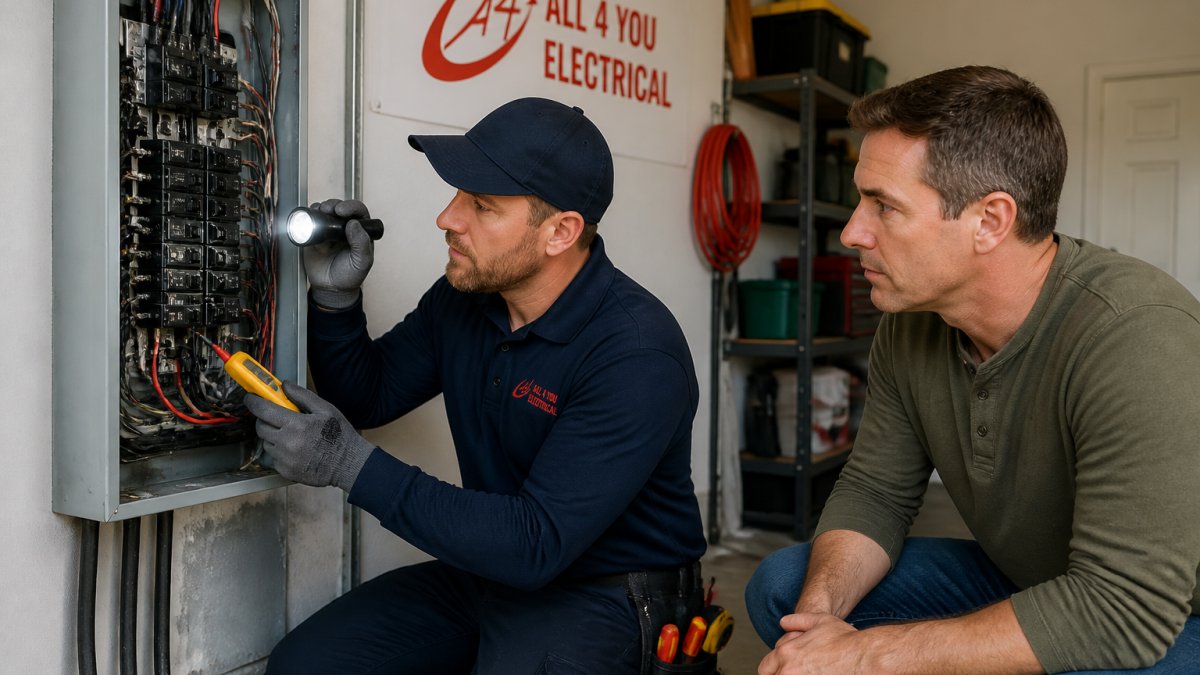
Most electrical repairs follow the same basic arc. An electrician arrives, inspects the problem, explains the fix, and gets your approval before starting work.
That last part matters. You should never feel pressured into a repair you do not understand.
From Your First Call to the Technician’s Arrival
The process starts before anyone knocks on your door. When you call, expect a few questions:
- What is happening? (Lights flickering? Breaker tripping? Dead outlet?)
- When did it start?
- Has anything changed recently, like new appliances or a renovation?
These details help the office route the right electrician and stock the right parts.
On arrival, a good electrician confirms the reported symptoms with you. They should also ask about any prior work on the home’s electrical system.
Diagnosis and Inspection: Finding the Root Cause
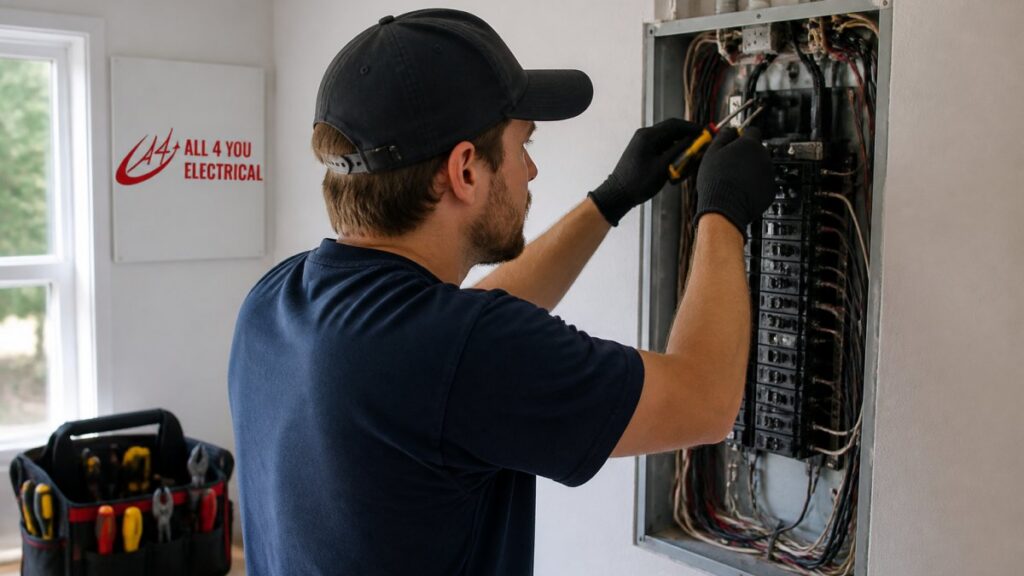
Diagnosis is where experience shows. An electrician will inspect the electrical panel, test circuits with a voltage tester, and trace wiring to isolate the fault.
The goal is simple: find the root cause, not just the symptom. A tripping breaker might point to an overloaded circuit, a loose connection, or faulty wiring deeper in the wall.
A proper electrical inspection also checks for related hazards. Electricians look for signs of overheating, scorch marks, and loose connections that could become a fire hazard later.
Never reset a breaker that trips repeatedly. Each reset sends current through a fault that may be overheating. Instead, leave it off and call a licensed electrician.
How to Prepare for an Electrician Before They Arrive
Preparation saves time and money. Clear the work area, secure pets, and make sure an adult is home to answer questions.
Here is a simple checklist for how to prepare for an electrician:
- Clear furniture and belongings away from the electrical panel
- Move boxes or storage blocking outlets and switches
- Note every symptom: which rooms, which fixtures, when it happens
Access matters more than most people realize. If the electrician cannot safely reach the panel, the visit stalls before it starts.
Common Electrical Repairs and What They Involve
Most residential electrical services fall into two buckets: fixture-level fixes and panel-level work. Knowing which one you need helps you plan.
A dead outlet is usually a quick fix. A failing breaker panel is a bigger project with more steps.
Outlets, Switches, and Light Fixtures
Outlet and switch repairs are the most common calls. The electrician kills power at the breaker, removes the cover plate, and tests for voltage.
From there, the fix depends on what they find:
- Loose connections: wires are re-stripped and re-terminated
- Worn outlets: the outlet is replaced, often with a GFCI outlet near water
- Faulty switches: the switch is swapped, and wiring is checked
Most of these repairs finish within an hour once the cause is confirmed.
Circuit Breakers and Panel Work
Breaker and panel repairs take longer because safety stakes are higher. The electrician shuts off the main power supply before opening the breaker panel.
Common panel tasks include:
- Replacing a failed circuit breaker
- Tightening or replacing damaged connections
- Upgrading an older panel that cannot handle modern loads
Older homes often need extra care here. Wiring from decades past may not meet current code compliance, and the electrician will flag anything that needs attention.
Ask the electrician to photograph the inside of your panel before and after the work. It gives you a record for future repairs and helps the next technician understand your system.
How Long Electrical Repairs Take and What Causes Delays
How long electrical repairs take depends on the job. A simple outlet swap might take 30 to 60 minutes. Panel work can run several hours.
Delays come from a few predictable places:
- Hidden damage: the problem is worse once the wall is open
- Permits: some work requires inspection before it can be finalized
- Parts: uncommon breakers or fixtures may need to be ordered
If the repair cannot be finished in one visit, a good electrician explains why and schedules the follow-up before leaving.
Understanding Your Electrical Repair Cost Estimate
An electrical repair cost estimate should break down labor, parts, and any permit fees. Ask for it in writing before work begins. The estimate is not just a number, it is the document that governs what gets done, what gets added, and what you owe at the end.
A clear estimate includes:
| Estimate Item | What It Covers | What to Ask |
|---|---|---|
| Labor | Time on site at an hourly or flat rate | Is the rate hourly or fixed? Is there a minimum charge? |
| Parts | Breakers, outlets, wire, fixtures | Are parts billed at cost or marked up? Are they warrantied? |
| Permits | Local inspection fees if required | Who files the permit, and is the fee passed through or built in? |
| Diagnostic fee | The trip and troubleshooting time | Is it waived if you approve the repair? |
| Contingency | Possible extra work if damage is found | How is added work approved, and by whom? |
How Estimates Get Built
Most electricians price a repair one of three ways. A flat-rate price quotes the whole job up front, so the number does not move unless the scope changes. Time-and-materials bills actual hours plus parts, which is common for diagnostic-heavy calls where the cause is unknown.
Ask which model applies before work starts. The answer tells you how much price risk you carry.
How Approval and Change Orders Work
This is the part most homeowners never hear explained. A written estimate covers the scope described in it, nothing more.
A reputable electrician stops, shows you what was found, and presents a revised price before continuing. You approve or decline in writing, text, email, or a signed change order all work. No work should proceed on added scope without your sign-off.
Be cautious of any electrician who expands the scope verbally and only reveals the added cost on the final invoice. Legitimate change orders are documented before the work happens, not after.
What Actually Drives the Price
Four factors move the number more than anything else:
- Access: a panel in a finished basement behind stored boxes takes longer than one in an open garage.
- Age of the system: older wiring, ungrounded circuits, and undersized panels add labor and parts.
- Parts availability: a standard 20-amp breaker is stocked on most trucks; an obsolete panel breaker may need to be ordered.
Pricing depends on the scope of the job, the parts needed, and how accessible the wiring is. We give free upfront estimates so you know the number before we start. No surprise charges later.
The best estimate is not the cheapest one. It is the one that clearly lists what is included, what is not, and how changes get approved in writing before the work continues.
Questions to Ask an Electrician Before Work Begins
A short conversation before work starts prevents most misunderstandings. Here are the questions to ask an electrician:
- Are you licensed and insured?
- Will you provide a written estimate before starting?
- What happens if you find additional problems?
- Will the power be off, and for how long?
- Do you clean up when the job is done?
That last question matters more than people think. Drywall dust and wire clippings travel. A professional crew lays drop cloths and vacuums the area before leaving.
Safety During Repairs: What Homeowners Should Know
Safety during repairs is a shared job. The electrician handles the technical risks. You handle access and boundaries. Getting those roles clear before work starts prevents most problems.
Your Role While Work Is Underway
Keep these rules in mind while work is underway:
- Stay out of the work area unless invited in
- Never touch tools, wires, or the open panel
- Keep children and pets away from the workspace
If you need to leave the house, tell the electrician first. They may need to shut off power to a circuit you depend on, or they may need you reachable for an approval decision.
If an Urgent Hazard Is Found
Sometimes the diagnosis turns up something worse than the original complaint, a scorched panel bus, a backstabbed outlet that has been overheating, or a circuit with no ground.
You have two decisions to make at that point: approve the added repair now, or leave the circuit de-energized until you can schedule the work. Leaving a known hazard live is the one option a reputable electrician will not offer.
If you smell burning, see scorch marks, or hear buzzing from a panel or outlet, treat it as an emergency. Do not wait for a scheduled appointment, call for same-day service and keep the affected circuit off until an electrician arrives.
How the Repair Gets Verified
Once the repair is done, the electrician should test the circuit, restore power, and confirm everything works. Verification is not just flipping the breaker back on. A proper check includes:
- Testing voltage at the repaired device with a multimeter
- Confirming the circuit holds under load, plugging in a known load and watching for heat or voltage drop
- Checking that GFCI outlets trip and reset correctly
Ask for a quick walkthrough of what was replaced. A good electrician will show you the old part and explain what failed.
Cleanup and Documentation
Cleanup is part of the job, not a courtesy. Expect drop cloths under the work area, wire clippings collected, and drywall dust vacuumed before the crew leaves.
Documentation matters for the next repair. Ask for:
- A written summary of what was repaired and what parts were used
- Photos of the panel interior before and after, if panel work was done
- The permit number and inspection status, if a permit was pulled
Electrical work carries real hazards, including shock hazard and fire hazard. The Occupational Safety and Health Administration guidelines on electrical safety outline why de-energizing circuits before work is a core safety step.
A safe repair ends with three things: a tested circuit, a clean workspace, and a written record you can hand to the next electrician who works on your home.
Conclusion: What to Expect and How to Move Forward
Electrical repairs follow a predictable path: call, diagnosis, estimate, approval, repair, and cleanup. When you know the steps, the process feels far less stressful.
If you are dealing with a tripped breaker, a dead outlet, or a panel that needs attention, do not wait.
All 4 You Electrical is a family-owned team serving Boise and Meridian with over a decade of experience.
Frequently Asked Questions
What should I do before an electrician arrives for electrical repairs?
Clear at least three feet of space around your electrical panel and the area where the problem is. Move furniture, boxes, or stored items out of the way. Write down when the problem started, what you were doing when it happened, and any sounds, smells, or flickering you noticed. If you have pets, secure them in a separate room. Also, note any recent changes like a new appliance or a recent storm. This information helps the electrician diagnose the issue faster.
How long do electrical repairs usually take?
Most simple electrical repairs, like replacing an outlet or a light switch, take 30 to 60 minutes. Replacing a light fixture or a circuit breaker typically runs one to two hours. More involved work, such as tracing a fault in hidden wiring or repairing a circuit with multiple issues, can take three to five hours or require a follow-up visit. Panel upgrades and whole-home rewiring are multi-day projects. Your electrician should give you a time estimate after the initial inspection.
Will I need to turn off the power during electrical repairs?
Yes, in almost every case. The electrician will turn off power to the affected circuit at the breaker panel before starting work. For panel repairs or upgrades, the main power may need to be shut off for the duration. Your electrician will tell you in advance which circuits will be off and for how long. Plan to unplug sensitive electronics and avoid using that circuit until the work is complete and tested.
What should I check after an electrical repair is complete?
Test every outlet, switch, and fixture on the repaired circuit to confirm they work. Ask the electrician to walk you through what was replaced and why. Request a written summary of the work done, including any parts used and the final test results. Check that the work area is clean and free of debris. If the repair involved a panel or wiring, ask whether a follow-up inspection is needed for code compliance. Save all paperwork for your records.