
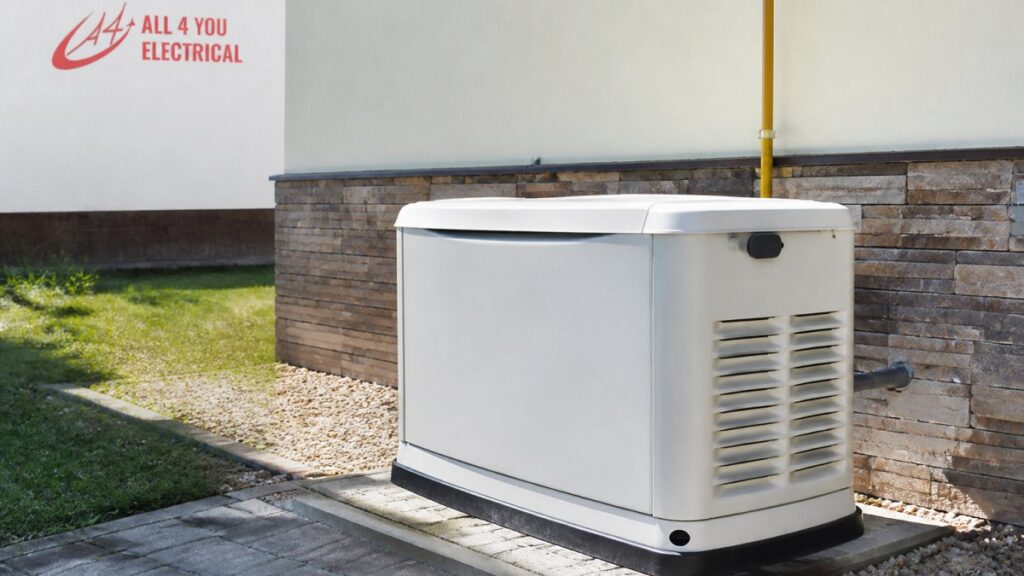
Last Updated: October 25, 2026
Quick Summary
A home backup generator provides automatic backup power during utility outages, protecting food, maintaining heating or air conditioning, and powering critical equipment like medical devices and security systems. Installation typically costs $7,000 to $15,000, and the system pays for itself within 5 to 8 years when annual outage-related expenses exceed $2,000.
- Standby generators activate automatically within seconds of a power failure with no manual intervention required
- A typical home backup generator powers refrigerators, HVAC systems, water heaters, sump pumps, lighting, medical devices, and security systems
- Installation costs range from $7,000 to $15,000 and include equipment, electrical work, fuel supply setup, and permits
- Annual professional maintenance typically includes oil changes, spark plugs, battery testing, and transfer switch inspection
- Residential standby generators last roughly 15 to 20 years with proper maintenance
Table of Contents
- Why Install a Home Backup Generator
- Reliable Backup Power When Utility Power Fails
- What Can a Generator Power During an Outage
- Understanding Home Backup Generator Cost and ROI
- Home Generator Runtime: How Long Can It Run
- Generator Maintenance Checklist for Long-Term Reliability
- Getting Your Generator Installation Started
- Frequently Asked Questions
Why Install a Home Backup Generator
A home backup generator isn’t a luxury, it’s a practical solution to one of the most disruptive problems homeowners face.
A home backup generator bridges the gap between the moment the grid fails and the moment it comes back online, whether that’s hours or days.
The real value of a home backup generator goes beyond convenience: it protects your food, keeps your family comfortable, maintains security systems, and powers critical equipment.
Reliable Backup Power When Utility Power Fails
A standby generator activates automatically the moment utility power fails. The automatic transfer switch detects the outage and signals the generator to start within seconds, so your home stays powered without any manual intervention.
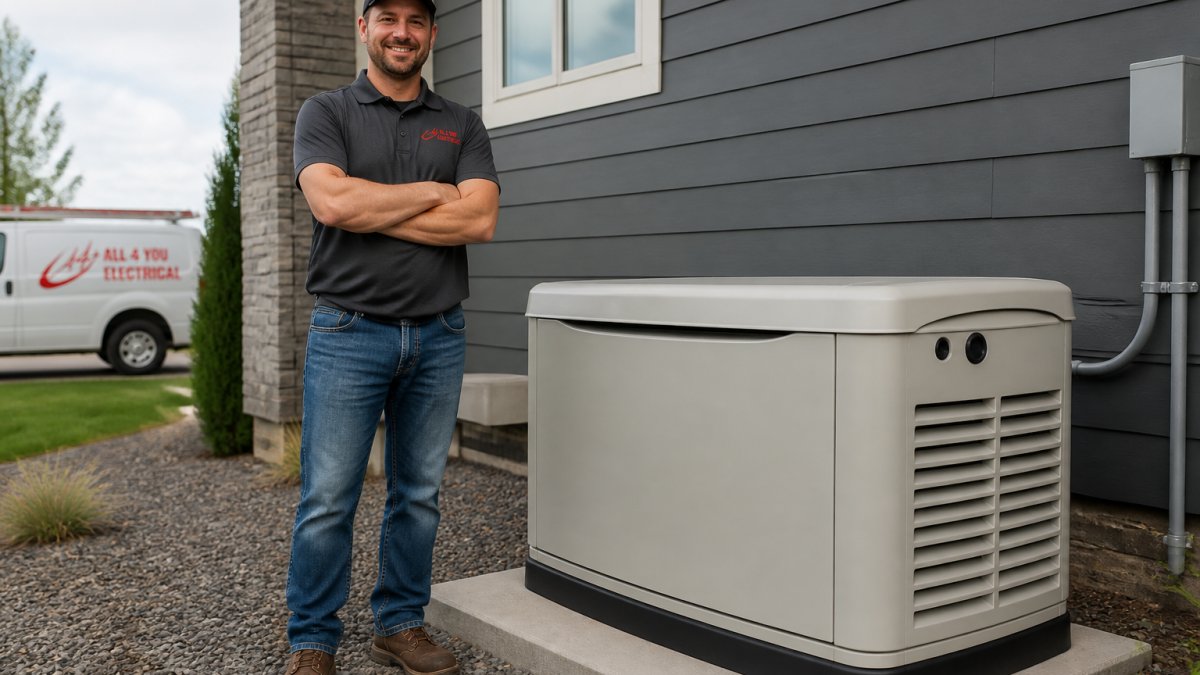
This separates a standby generator from a portable one, which requires manual connection, switch-flipping, and fuel management.
Whole-house generators run on natural gas or propane, so they operate as long as your fuel supply lasts.
What Can a Generator Power During an Outage
Not every circuit in your home needs backup power.
A typical home backup generator setup powers:
- Refrigerator and freezer (preventing food spoilage)
- Heating system or air conditioning (maintaining indoor temperature)
- Water heater and water pump (if you have a well)
A transfer switch directs generator power to the circuits you’ve designated as critical; other circuits remain off, so you power just what matters most.
For homeowners with medical equipment, a generator becomes essential: oxygen concentrators, CPAP machines, and dialysis equipment can’t wait for the grid to come back.
Freezers and refrigerators are another priority: food spoilage is a financial loss and a health risk, and a generator keeps your food cold.
Understanding Home Backup Generator Cost and ROI
Homeowners ask a simpler question than most articles answer: what does it cost, what does it cost to run, and is it worth it for my house?
What drives the installed price
A standby generator installation has four cost components, and each one varies by home:
- Equipment. The generator unit itself is the largest single line item. Capacity, fuel type, and enclosure rating drive the price. A smaller essential-circuit unit costs meaningfully less than a whole-house unit sized to carry central air conditioning and an electric range.
- Electrical work. This includes the automatic transfer switch, the feeder wiring from the generator to the service panel, and any panel upgrades. Older panels or panels with no spare capacity often need replacement before a generator can be connected.
- Fuel supply. A natural gas connection may require a new gas line, a larger meter, or a pressure regulator upgrade. A propane system requires a tank and line, and the tank is frequently the second-largest cost after the generator itself.
According to PowerOutage.us cost guide, whole-house generator installation typically ranges from $7,000 to $15,000 installed. Installation labor alone, including electrical work and transfer switch installation, typically ranges from $1,500 to $5,000, according to CNET’s generator ownership guide. Treat those as broad ranges, not quotes. A home that needs a new gas line, a panel upgrade, and a propane tank can land well above the top of the range; a home with an existing gas service and a modern panel can land near the bottom.
Ask for a line-item estimate, not a single number. A quote that separates equipment, transfer switch, fuel work, permits, and pad preparation lets you compare bids honestly and see which contractor is cutting corners.
Ongoing costs most buyers forget
Installation is the entry fee, not the total cost of ownership. Budget for:
- Fuel. A natural gas generator draws from your existing service, so the marginal cost shows up on your gas bill during outages and during weekly exercise runs. A propane unit consumes from a tank you must refill, and refills during a widespread outage can be slow because suppliers prioritize hospitals and shelters.
- Maintenance. Annual professional service typically covers oil and filter changes, spark plugs, valve adjustment checks, battery testing, and transfer switch inspection. Plan on a recurring annual expense for the life of the unit.
- Exercise fuel and wear. Generators run automatically on a weekly schedule to stay ready. That exercise cycle consumes a small amount of fuel and accumulates engine hours over the years.
How to judge ROI honestly
The financial case is not the same for every household. A generator is easiest to justify when:
- Outages are frequent or long enough that you regularly lose refrigerated food, pay for hotel nights, or lose work time.
- Someone in the home depends on powered medical equipment.
- The home has a well pump, sump pump, or septic system that stops working without power.
According to Skaggs Walsh analysis on generator ROI, when annual outage-related expenses exceed $2,000, a generator installation typically pays for itself within 5 to 8 years. Those expenses include food spoilage, hotel stays during extended outages, lost productivity, and emergency repairs from weather damage. If your annual outage losses are well below that threshold, the case rests more on comfort, safety, and property value than on direct payback.
A standby generator can also be a selling feature. Buyers in outage-prone areas pay attention to backup power, and a documented, well-maintained unit is more attractive. Keep your service records.
Do not size the generator to the whole house if your real priority is essential circuits. Oversizing raises equipment cost, fuel consumption, and the fuel supply work required. A right-sized essential-circuit system often delivers most of the benefit at a lower installed price.
:::
For a detailed breakdown of installation expenses specific to your situation, explore the residential generator installation cost breakdown.
Home Generator Runtime: How Long Can It Run
Runtime depends on fuel supply and load: essential circuits only consume less fuel and run longer, while more circuits increase consumption and shorten runtime.
Propane generators depend on tank size: a 500-gallon tank powering essential circuits might run several days or longer, and larger tanks extend runtime further.
The practical advantage: you’re not managing fuel or manually refueling during an outage.
Generator Maintenance Checklist for Long-Term Reliability
A standby generator is the one appliance in your home that must work on the worst day of the year, after sitting idle for months. That’s why maintenance matters more here than for almost anything else you own.
Why idle time is hard on a generator
A generator that waits for an outage sits in an enclosure through humidity, temperature swings, and dust. Over time:
- Engine oil absorbs moisture and contaminants and loses its protective film.
- Fuel can degrade, especially in propane and diesel systems, and stale fuel causes hard starting and rough running.
- The starter battery self-discharges and sulfates, so the unit cranks weakly or not at all when called upon.
Most of these failures are invisible until you need the generator, which is the core argument for scheduled service.
The maintenance schedule that actually matters
| Interval | Task | Why it matters |
|---|---|---|
| Weekly (automatic) | Exercise cycle, typically 15-20 minutes | Keeps the engine lubricated, battery charged, and fuel moving; most controllers log the run |
| Monthly | Visual check of enclosure, clear debris, confirm no alarms on the controller | Catches rodent damage, leaks, and fault codes early |
| Every 6 months | Battery load test, inspect belts and hoses, check oil level | Batteries are the most common no-start cause |
| Annually | Professional service: oil and filter change, spark plugs, valve clearance check, transfer switch inspection and exercise under load | Verifies the whole system, not just the engine |
| Annually | Fuel system inspection: gas line leak check or propane tank level and regulator check | Fuel problems are the second most common no-start cause |
| As needed | Oil change based on engine hours if the unit ran through a long outage | Extended runtime accelerates wear |
Most manufacturers publish a service schedule in the owner’s manual, and following it is what preserves the warranty. A common pattern is annual professional service plus owner-level checks in between.
Test under load, not just in exercise mode. An exercise cycle with no electrical load proves the engine starts; it does not prove the generator can carry your house. Ask your technician to transfer the home to generator power during the annual service so the transfer switch and the full load path are verified.
What maintenance costs and what it prevents
Annual professional service is a recurring expense, small relative to the cost of a failed start. The expensive failures are predictable:
- Dead battery. The single most common reason a standby generator fails to start. A battery replacement is inexpensive; a no-start during a winter storm is not.
- Stuck transfer switch. The generator runs, but the house stays dark. This is a safety-critical failure because the switch also isolates the utility line to protect line workers.
- Stale or contaminated fuel. Causes rough running, surging, and shutdowns, and often requires fuel system service.
Expected lifespan and the replacement decision
With proper maintenance, most residential standby generators last roughly 15 to 20 years. Control boards, transfer switches, and batteries tend to fail before the engine, and those are replaceable. When repair costs approach a meaningful fraction of replacement cost, or parts become unavailable, replacement becomes the better decision.
Keep a simple log of date, engine hours, service performed, and faults. It supports warranty claims, helps the next technician, and adds credibility if you sell the home.
Never skip the transfer switch inspection. The switch is what makes the generator safe and functional, and a switch that fails to transfer leaves you with a running generator and a dark house.
The investment in maintenance is small compared to the cost of a generator that doesn’t work during an emergency.
Getting Your Generator Installation Started
The first step is understanding what you need: essential circuits or whole-house coverage, your budget, and which fuel type is practical.
Discover what a professional generator installation involves and how the process works from start to finish. If you’re in the local area, learn about generator installation services that handle everything from design through final testing.
All 4 You Electrical offers free upfront estimates so you can understand your options and costs before committing. We handle the entire process, from assessing needs to permits to cleanup.
The right time to install a generator is before you need it. Once an outage hits, it’s too late, and planning, permitting, and installation take time.
For homeowners in the area ready to move forward, explore generator installation in the local area to see how we can help you prepare for power outages.
Frequently Asked Questions
Is a home backup generator worth the investment?
A home backup generator becomes worthwhile when outage-related costs, such as food spoilage, heating loss, or business interruption, reach a certain level. At that point, installation can pay for itself over time. Beyond financial return, backup power protects comfort, safety, and essential systems during extended outages. Your specific situation depends on outage frequency in your area, the critical systems you need to support, and your budget for installation and maintenance.
What can a generator power during an outage?
A whole-house generator can power essential systems including HVAC heating and cooling, refrigerators to prevent food spoilage, water pumps and septic systems, medical devices, security systems, lighting, and personal device chargers. A properly sized generator with an automatic transfer switch activates instantly when utility power fails, maintaining these critical circuits without interruption. Portable generators offer more limited capacity and require manual startup, making them suitable for powering specific appliances or tools rather than whole-home systems.
How much does it cost to install a home backup generator?
Whole-house generator installation costs vary, with equipment and installation labor contributing to the total. The final cost depends on generator capacity, your home’s electrical panel, fuel type, and local installation complexity. Contact a licensed electrician for a free upfront estimate tailored to your specific home and power needs.
How often does a home generator need maintenance?
A home backup generator should be tested monthly and serviced annually by a qualified technician. Regular maintenance includes checking fuel levels, inspecting the battery and electrical connections, testing the automatic transfer switch, and changing oil and filters as recommended by the manufacturer. Annual professional servicing ensures the generator starts reliably when needed and extends its operational lifespan. Proper maintenance protects your investment and prevents costly failures during actual outages.
A home backup generator transforms how you experience a power outage. Instead of losing power, losing comfort, and losing food, you maintain control. Your home stays powered. Your family stays safe. Your investment stays protected. All 4 You Electrical specializes in generator installation with free estimates, quick response times, and work that leaves your property clean. Contact us today to discuss which backup power solution fits your home and your needs.
