Last Updated: November 21, 2026
Quick Summary
A sparking outlet is an electrical emergency: unplug the device, switch off the breaker controlling that circuit, and do not plug anything back in until a licensed electrician inspects it. If you cannot find the right breaker, switch off the main breaker instead.
- Pull plugs by the plug body, not the cord, to avoid drawing an arc toward your hand.
- Call for emergency service if you see smoke, scorch marks, heat, or repeated sparks.
- A single faint snap when plugging in a heavy-draw device can be normal static or inrush current.
- If a breaker trips again right after you reset it, stop resetting it and call an electrician.
- All 4 You Electrical offers free estimates upfront and serves Boise and Meridian.
Table of Contents
- What to Do If an Electrical Outlet Sparks
- Why an Outlet Sparks When Plugging In
- When an Outlet Blew Out: What to Do Next
- Causes and Risk Levels Behind a Sparking Outlet
- What Happens During Electrical Outlet Repair in Boise
- What Emergency Outlet Repair Costs and How Pricing Works
- Prevention and Follow-Up Checks After a Repair
- Schedule Your Emergency Outlet Repair
- Frequently Asked Questions
What to Do If an Electrical Outlet Sparks
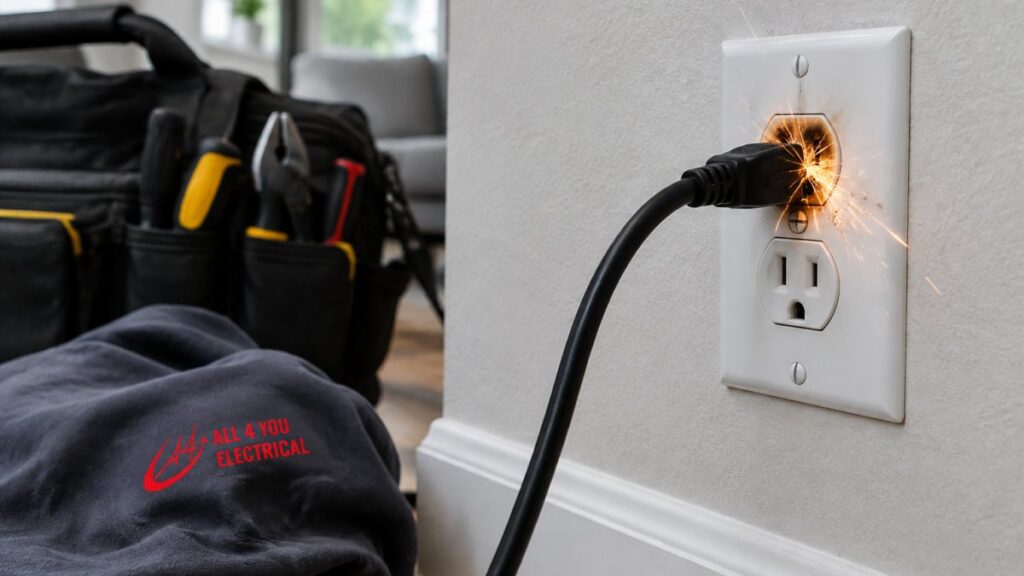
A sparking outlet is an electrical emergency: stop the power before you touch anything else. A sparking outlet is a sign that something inside the wall box or circuit may be failing, not a quirk to ignore. Unplug the device, kill the breaker, and do not plug anything back in until a licensed electrician inspects it.
Here is the sequence we want every homeowner to follow:
- Unplug the device from the outlet, using the plug body, not the cord.
- Step away from the outlet and keep children and pets clear.
- Go to your electrical panel and switch off the breaker that controls that circuit.
- Test the outlet with a plug-in tester or a small lamp to confirm it is dead.
- Call for service and describe exactly what you saw.
The order matters: pulling a plug from an actively arcing outlet can draw the arc toward your hand.
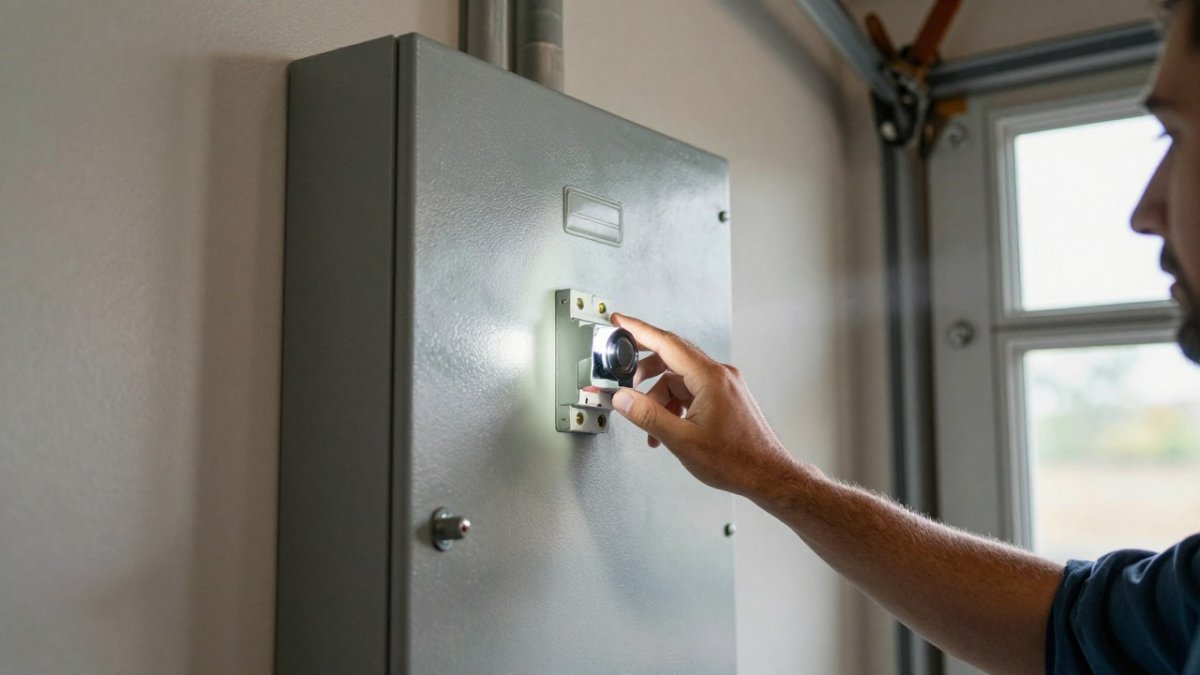
Cut the Power at the Breaker First
Killing the breaker is the most important step, and the one people skip. A sparking outlet can keep arcing behind the wall plate after the device is unplugged, because the fault may sit in the wiring or receptacle itself. The breaker removes that risk at the source.
If you cannot tell which breaker controls the outlet, switch off the main breaker. Losing power to the whole house for a few minutes is a fair trade. Label the breaker once you find it.
For a refresher on the safe procedure, our guide on how to reset a tripped breaker safely walks through the panel steps in detail.
When a Spark Means Call for Emergency Service
Not every spark is a same-second emergency, but several are. Call for emergency service when you see any of the following:
- A spark accompanied by smoke, a burning smell, or scorch marks on the plate
- Repeated sparks when you plug in the same device
- A buzzing, crackling, or sizzling sound from the outlet
- The outlet or wall plate feels warm or hot to the touch
- Breakers that trip again right after you reset them
- Any spark in a bathroom, kitchen, garage, or near water
A single faint snap when you plug in a heavy-draw device can be normal static or inrush current. Anything louder, repeated, or accompanied by heat is not. When in doubt, treat it as an emergency. If it is urgent, you can reach an emergency electrician in Boise, ID and get someone dispatched.
Why an Outlet Sparks When Plugging In
An outlet sparks when plugging in because current jumps a gap between metal contacts, and that gap should not exist in a healthy receptacle.
Electricity wants a continuous path. When plug prongs meet the receptacle’s internal contacts at an angle, or the contacts have lost spring tension, the connection is briefly incomplete. Current arcs across that tiny gap, and you see and hear the result.
The device matters as much as the outlet. A worn plug with bent prongs, or a heavy appliance like a space heater or window AC, can strain the connection. If the same outlet sparks with one device but not another, the device is a suspect. If it sparks with everything, the receptacle is the problem.
When an Outlet Blew Out: What to Do Next
An outlet that “blew out” has usually failed in one of two ways: the receptacle itself is dead, or the breaker upstream has tripped. Start by checking the panel. If the breaker is tripped, reset it once and watch what happens.
If the breaker holds but the outlet stays dead, the problem is likely the receptacle, a loose connection behind it, or a break upstream. Test nearby outlets and switches on the same circuit. A dead outlet next to working ones points to that receptacle; several dead outlets point to the breaker, the wiring, or a junction box.
Do not open the wall yourself to investigate unless you are trained and the circuit is confirmed off. The wires behind a dead outlet can still be live if they are fed from another circuit.
Causes and Risk Levels Behind a Sparking Outlet
A sparking outlet has a cause, and the cause tells you how much danger you are in. We sort them into three rough risk levels when we walk a customer through a diagnosis.
| Cause | What You Notice | Risk Level |
|---|---|---|
| Worn receptacle contacts | Faint spark, loose plug fit | Moderate, replace soon |
| Loose wiring at terminals | Spark plus flickering or heat | High, service now |
| Overloaded circuit | Breaker trips, warm plate | High, redistribute load |
| Moisture or debris in slot | Spark in damp areas | High, service now |
| Damaged cord or plug | Spark only with one device | Moderate, replace device |
| Faulty wiring in the wall | Repeated trips, burning smell | Emergency, call now |
Loose wiring worries us most. A connection worked loose at a terminal screw creates resistance, and resistance creates heat that builds quietly inside a wall box, a common path to a house fire. A loose outlet that wiggles when you plug something in is a warning, not a minor annoyance.
Overloaded circuits deserve their own mention. If a faulty outlet sparks only when several things are running, the circuit is carrying more than it should. Move loads to other circuits and have an electrician check the capacity of the circuit and the panel.
What Happens During Electrical Outlet Repair in Boise
An electrical outlet repair starts with a diagnostic, not a screwdriver. A licensed electrician should confirm the circuit is dead, then open the wall box and inspect the receptacle, the wiring, and the connections.
Outlet replacement is the most common fix: the electrician removes the old receptacle, checks the wires for heat damage or looseness, re-strips if needed, and installs a new device rated for the circuit.
Loose wiring repair means re-terminating the connections, and often pigtailing to improve the joint. Circuit work may mean moving outlets to a different circuit, adding a dedicated line for a heavy appliance, or upgrading a panel that is out of capacity.
A good electrician also checks the rest of the circuit while the box is open. If you want to know what the visit looks like from start to finish, our guide on what to expect during electrical repairs covers the process for homeowners.
What Emergency Outlet Repair Costs and How Pricing Works
Emergency outlet repair pricing depends on the scope of the work, so no single figure applies before the outlet is inspected.
The repair is priced on scope, and the larger the job, the more labor and materials it involves. Ask for a written estimate that breaks out what is included.
If the outlet is not actively smoking or arcing and the breaker is holding, a scheduled appointment may be a reasonable choice.
Before you approve any work, ask what is included, what is extra, and whether the price is fixed or time-and-materials.
Ask for an upfront estimate, in writing if possible, and what would change it. All 4 You Electrical offers free estimates upfront.
Prevention and Follow-Up Checks After a Repair
Prevention after an outlet repair is mostly about catching a repeat early, because the outlet that failed once is often the first sign that something on the circuit is marginal. The repair fixes the point of failure; the follow-up checks tell you whether the cause was isolated or part of a pattern.
Start with the first week. Ask the electrician to show you what failed and what was replaced, and whether the cause was the receptacle, the wiring, or the load.
A practical follow-up routine looks like this:
- Feel the wall plate at the repaired outlet after running a heavy load for a while. Warmth is a warning; heat is a call.
- Plug in the same device that caused the original spark and watch and listen for a repeat. A single faint snap on a heavy-draw device can be normal inrush; a crackle or a visible flash is not.
- Check whether the breaker holds through a normal week of use. A breaker that trips again on the same circuit is telling you the fault was not fully resolved.
- Look at nearby outlets on the same circuit for loose fit, discoloration, or warmth, since they share the wiring path.
- Pull plugs by the plug body, not the cord, and replace any cord with a bent or damaged plug end rather than working around it.
Watch out: do not treat a repaired outlet as proof the circuit is healthy. A repair at one box does not inspect junctions behind the wall or panel connections, common places for the heat that started the problem.
Schedule Your Emergency Outlet Repair
A sparking outlet is a small event with a large downside, and the difference between a quick fix and a house fire is often how fast you act.
All 4 You Electrical is a family-owned electrical company serving Boise and Meridian with over a decade of experience and free estimates upfront. We provide residential and commercial electrical services, and we have a 5.0 rating on Google across 123 reviews.
Call us, describe what you saw, and we will tell you what to do next and get a licensed electrician out to make it safe. You can reach our 24/7 emergency electrical service and schedule a visit, or read our guide on booking emergency electrical repair if you want the process laid out first.
A sparking outlet will not fix itself, and the longer it arcs, the more damage it does behind the wall. All 4 You Electrical offers free upfront estimates, fast response to inquiries, and a clean workspace when the job is done, so you know exactly what you are getting before we start.
Frequently Asked Questions
What should I do if an electrical outlet sparks?
Stop using the outlet immediately and unplug anything connected to it, if it is safe to reach. Turn off the circuit at your breaker panel, then keep the outlet out of use until an electrician inspects it. A single small spark when plugging in a device can happen, but repeated sparking, a burning smell, or scorch marks point to a problem that needs professional repair. Do not plug the device back in to test it.
Is it safe to use an outlet that sparked?
No. Even if the outlet still works, a spark can signal loose wiring, a damaged outlet, or an overloaded circuit that will not fix itself. Using it again risks another arc, a shock, or a fire. Leave the breaker off and have a licensed electrician inspect the outlet and the wiring behind it before you plug anything back in.
When does a sparking outlet require emergency repair?
Call for emergency service if you see flames, smoke, or a burning smell, hear buzzing or crackling, notice scorch marks or melted plastic, or the breaker will not reset. These signs point to active arcing or faulty wiring that can start a fire. If the spark was brief, the outlet is dead, and there is no heat or smell, shut the breaker off and schedule a prompt repair visit.
Can a broken outlet be repaired, or does it need replacement?
Most faulty outlets can be repaired or replaced, and the fix is often straightforward once an electrician inspects the wiring. A loose outlet, worn contacts, or a damaged faceplate usually means replacement. If the problem traces back to loose wiring or an overloaded circuit, the electrician addresses that too so the new outlet is not stressed the same way. A safe inspection confirms which path applies.
